

As remote work took the reins of the corporate world, employees chose the digital nomad lifestyle over the 9-to-5 office chair. That is, choosing a lifestyle to explore new places and earn simultaneously.
And, as a remote worker myself, Spain has always been in my top 3 choices for starting my digital nomad career.
Its exotic backdrop, varied cultural hubs, and dynamism of the streets beckon me to settle there while working remotely.
Now, with the Spain Digital Nomad Visa, this impossibility has become a plausible dream for many remote workers, including me.
So, if Spain has also been on your wish list as one of the best digital nomad destinations, I have brought you the ultimate guide to enjoy the Spanish Salsa.
In this blog, I will be decoding everything about the Spanish Digital Nomad Visa by focusing on—
- Its key benefits and challenges,
- Eligibility criteria for remote workers,
- Steps to apply for the visa, some tips, and more.
So, come dive right in!
What Is The Spain Digital Nomad Visa?
Now, before diving into all the diverse aspects of the Spain Digital Nomad Visa, let’s see what it actually is.
That is, the Spanish digital nomad visa is designed specifically for non-EU residents to permit them to stay in Spain and work remotely for foreign companies.
So, it allows remote workers from across diverse nations to come and work remotely in Spain for foreign clients. This way, the country can bring in tourism and get foreign contributions to its economic conditions.
Key Benefits Of Working Remotely With The Spain Digital Nomad Visa
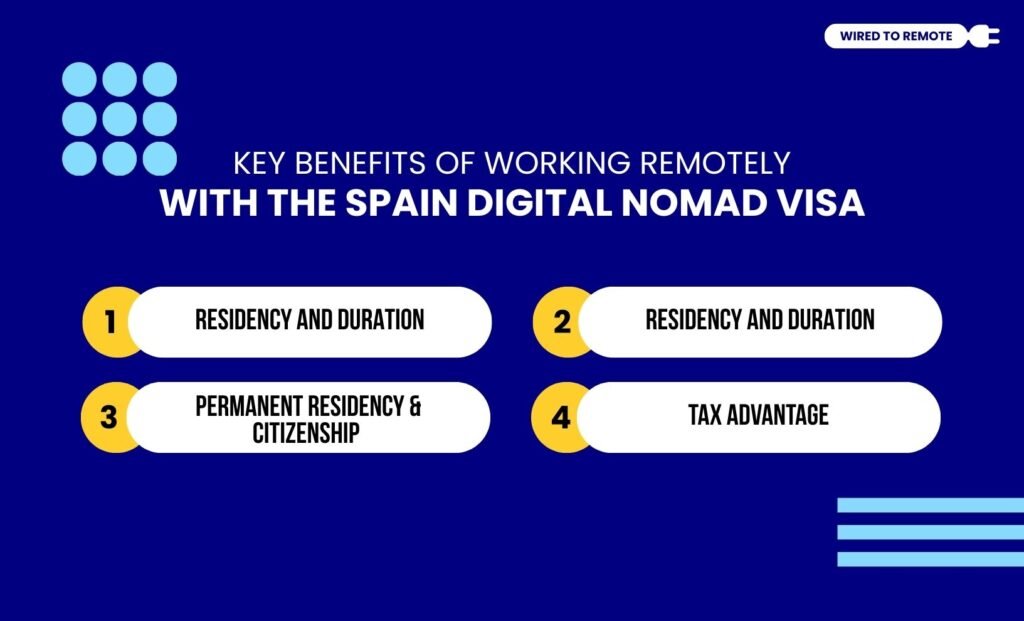
Given that the Spanish Digital Nomad Visa offers massive benefits, the country is hailed as one of the top digital nomad countries. So, some of its benefits include—
1. Residency And Duration
Firstly, the visa allows non-EU residents to stay in Spain for 1 to 3 years, based on the place of visa application.
That is, if the visa is applied for from abroad, it provides a 1-year permit. But if the visa is applied for from Spain, it provides a 3-year permit.
Additionally, it allows the remote worker to legally rent or stay in a place in Spain while working remotely for foreign companies and clients.
2. Schengen Mobility
Moreover, the visa comes with the Schengen Mobility. That is, it allows remote workers or digital nomads to travel visa-free around the 27 Schengen countries for a span of 90 days.
So, the workers can literally explore the vivid cultures and diverse tourist places, all while earning through their digital laptops. But the tour should be done within 180 days.
3. Permanent Residency And Citizenship
Additionally, the Spain Digital Nomad Visa opens the door to citizenship and permanent residency. That is, it allows the nomads to legally reside for 5 years or apply for permanent residency.
So, if you have dreamt of spending the rest of your life enjoying Salsa, exotic beaches, and listening to Flamenco and Gaita, this gives you the golden chance.
4. Tax Advantage
Unlike countries like Japan, Italy, or Germany, the Spanish visa for digital nomads does not exempt the tax completely.
Rather, it allows them to opt for the 24% income tax when working for local companies or Spanish entities.
But it exempts the workers from wealth tax and filing other government taxation policy forms like the Form 720.
What Is The Eligibility Criteria For The Spanish Digital Nomad Visa?
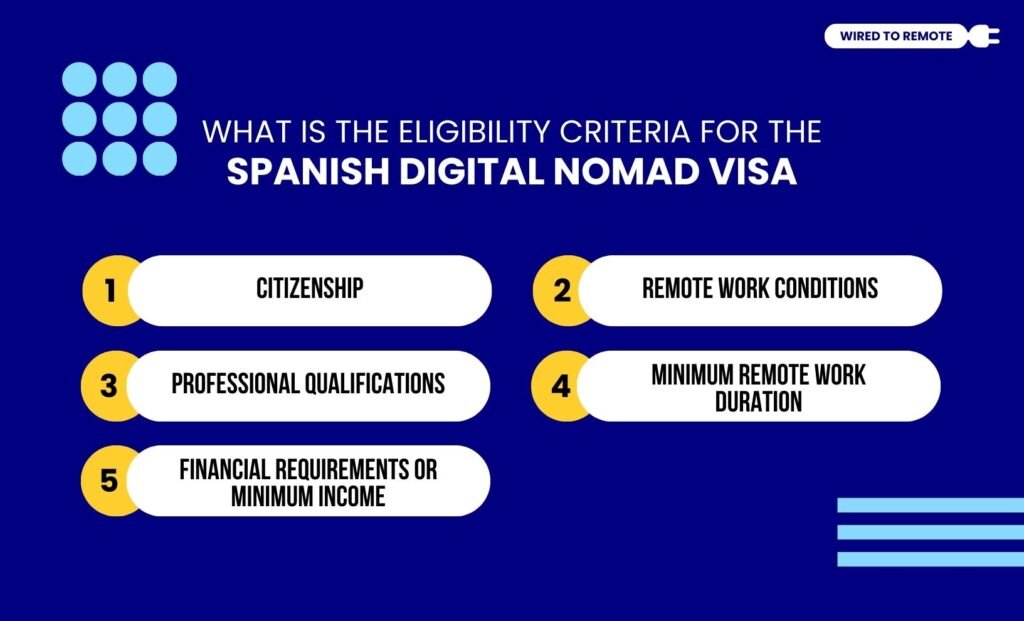
Now, to get approval for the digital nomad visa in Spain, there are a few criteria that you need to satisfy. So, some of these eligibility criteria include—
1. Citizenship
Firstly, you need to be a citizen outside the EU region. That is, you should be a national or citizen of any non-EU country.
2. Remote Work Conditions
Moreover, you should be working for foreign companies remotely to avail the visa. But it also allows workers to work for local entities on the condition of paying 24% of income tax.
So, the worker must source 80% of their income from companies and clients, and 20% from the local businesses or clients.
3. Professional Qualifications
Additionally, you need to have a university degree, a working professional certification, or at least 3 years of relevant working experience in your field of expertise.
So, you can start working remotely while staying in Spain. This way, the workers can sustain their livelihood in a foreign country with this visa.
4. Minimum Remote Work Duration
Also, you need to show the remote work contract with your foreign clients for at least the last 3 months. This will provide the details of the kind of remote work you will be doing and sourcing your monthly income from.
5. Financial Requirements Or Minimum Income
Finally, you should be making a minimum €2,700 per month to apply for the Spain visa.
Since the readjusted Spanish minimum wage rate of 2025, the minimum requirement of the income per month has increased. So, workers can sustain their livelihood in the country.
What Documents Are Required To Apply For The Spain Digital Nomad Visa?
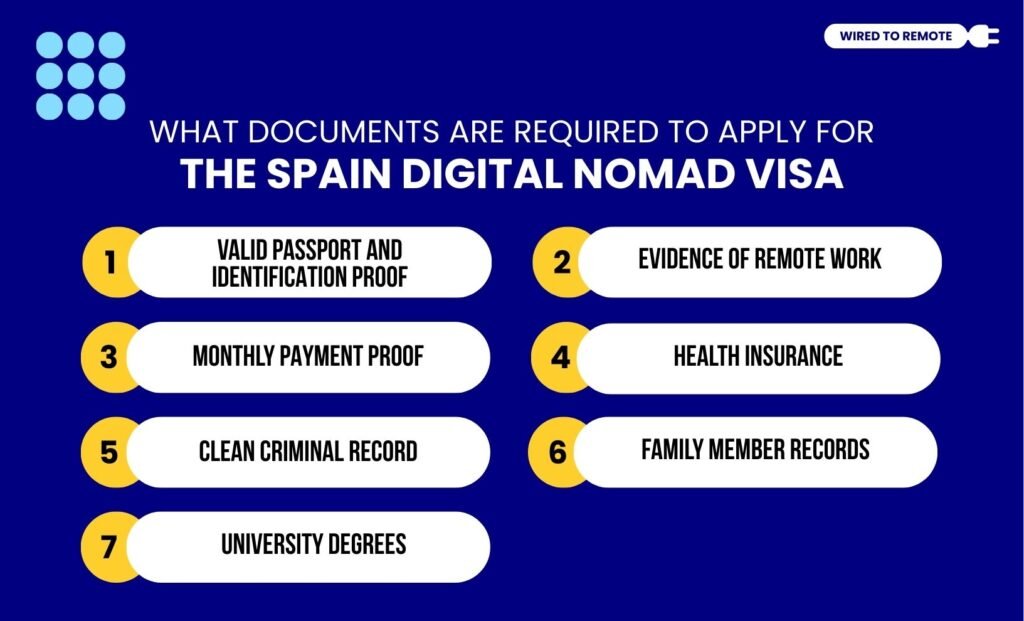
Since there is a specific eligibility criterion for getting approval for the Spain digital nomad visa, you need to provide a few official documents. So, here are the required documents—
- Valid Passport and Identification Proof: Firstly, you need to provide a valid passport and government documents to prove your nationality and identification.
- Evidence of Remote Work: Moreover, the employer details, contractual letter, or any other proof of your remote work is required.
- Monthly Payment Proof: Also, you need to provide monthly payslips or bank transactions as proof of income to be eligible for the minimum income rate.
- Health Insurance: Additionally, you need to have an international health insurance that covers most of the medical treatments offered in the various healthcare institutions of Spain.
- Clean Criminal Record: Also, you need to have a clean criminal record. That is, there should be no criminal convictions of over 12 months of imprisonment.
- Family Member Records: Moreover, if you are bringing your family members, you need to provide the relationship documents and their individual records to get approval for them, too.
- University Degrees: Finally, you need to show your degrees, professional work experience, and diploma course certifications as proof of your working competency.
How To Apply For The Spain Digital Nomad Visa?
Now, to apply for the Spain digital nomad visa, you need to follow these simple steps. So, just follow these steps—
- Firstly, collect the required documents and book an appointment with the local Spanish Embassy or go to the Ministry of Foreign Affairs online.
- Then, fill out the application form for the Spanish Digital Nomad Visa and attach the required documents with the application.
- After that, submit the application and pay the application fees.
- Then, you need to visit the Embassy with the application form and required documents to sit for the interview. Once you pass the interview session, your application will be confirmed.
- Finally, you need to wait for at least 15 to 45 days to collect the visa.
And, once you have the visa, just pack your bags and book the first flight to the dream digital nomad destination.
So, if you are still debating where to start your digital nomad lifestyle, take this as a call from Spain to kickstart your digital nomad journey. Enjoying the exotics and earning remotely!
FAQs
Here are some of the common questions that most remote workers look for about the Spain digital nomad visa.
Yes, but it comes with a condition. That is, the Visa allows non-EU residents to settle in Spain and work remotely for foreign companies and clients. But if the remote worker is working for a local company, the work should not exceed the 20% benchmark. That is, they can only work for 20% of the Spanish entities under the Spanish digital nomad visa.
Yes, absolutely. Unlike other digital nomad visas, the Spanish visa allows remote workers to bring their family members along with them. So, the digital nomad can bring their spouse or legal partner, minor children, and dependent adults along with proper relationship certificates.
Usually, it takes around 1 to 3 months for the entire Spanish digital nomad visa approval process. But the timing can vary based on the constitutional laws of the residential countries of the remote worker. So, it can approximately take around 3 to 6 months to get approval on the Spanish digital nomad visa.
Yes, absolutely. The Spanish government allows digital nomads to renew their visas to extend their stay up to 5 years. So, the remote worker can renew and continue working remotely in Spain for another 5 years. But the renewal application should be submitted within 60 to 90 days before the expiration of the digital nomad visa.


Leave A Comment