
I have been working in the corporate world for more than 8 years now.
In my experience, things weren’t that great in the first 4 years – it was messy, chaotic, and needless to say, I was about to break up with my toxic corporate life.
Surprisingly, when I had almost given up, I got an offer – the role was simple, the salary was decent, and I was desperate for stability.
So, I said yes – and it’s been four years since that day. I joined as a senior content writer, an executive in a team of 16 writers.
In 6 months, I was a team leader, and in another 1 year 6 months, I was a junior content manager.
Currently, I’m all set for my next promotion (if my boss is reading it, please remember my contributions!)
Initially, I thought it was about the job role – I was more suited to this role compared to my earlier experiences.
But gradually, I realized it was the organization – Viacon was unlike any other company I had ever worked with.
What was Viacon’s secret? A functional organizational structure – yep, that simple!
I used to think Viacon was successful because of several things – some complex, some simple. It took me some time to understand that it was two things really:
- A functional organizational structure, and
- A leadership that prioritized leading from the front – a leadership that was all about execution.
I guess you are a little confused about this organizational structure – don’t be!
The point of this blog? To discuss functional organizational structure in detail – break it down for you to understand in 5 mins, what I had to understand in a span of 8 years.
Stay tuned.
What Is A Functional Organizational Structure?

A functional organizational structure is a system in which employees are grouped into departments based on their skills or job functions.
Instead of organizing teams around projects or products, companies divide the workforce into specialized units such as marketing, finance, sales, and operations.
Personally, it’s a win-win – it is easy to plan, and most importantly, it is easier to get the work done. And I speak from experience.
So, each department is led by a manager who oversees employees performing similar tasks. Also, these managers report to senior leadership, typically a COO or an executive team.
For example, in the company I work in, the operational flow looks somewhat like:
- The marketing department handles branding, campaigns, and customer acquisition.
- The finance department manages budgets, accounting, and financial planning.
- The human resources department focuses on hiring, training, and employee policies.
- The operations department ensures that daily business processes run smoothly.
This arrangement allows employees to build deep expertise in their respective fields while maintaining clear reporting lines.
What I’ve seen from my experience is the importance of this structure in shaping daily workflow.
For instance, I have a team of 16 content writers working with me – and I report directly to the COO.
Similarly, I work closely with two other teams – the SEO and Graphics teams, both with their own managers reporting to the COO.
How a Functional Organizational Structure Works?
In a functional structure, authority flows vertically.
Each department operates under its own leadership, and employees report to a department manager who is responsible for decision-making within that function.
Like I was saying, I report directly to the COO, who is also the department head. Similarly, two other managers report to him as well – and the three of us have our own teams.
Now, within my team, there is a hierarchy with three team leaders – the three team leaders report to me, while having their own team of four employees each.
This way, there’s a place for growth within a team – and the motivation to work is so much more.
A simplified hierarchy may look like this:
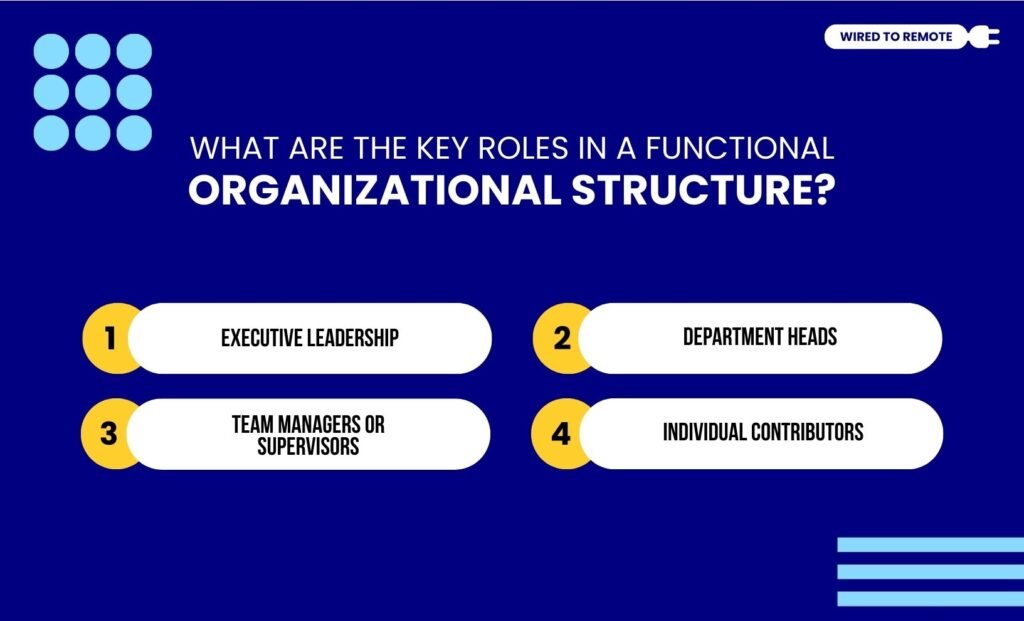
- CEO, COO, Or Executive Leadership.
- Department Heads (Marketing, Finance, Operations, HR).
- Team Managers.
- Individual Contributors.
So, the marketing team focuses on promotion and brand awareness, the finance team handles financial analysis and reporting, and operations ensures that the product or service is delivered efficiently.
While departments work independently, collaboration still occurs across functions when projects require input from multiple teams.
What Are The Key Roles In A Functional Organizational Structure?
So, the success of a functional organizational structure depends on clearly defined roles and responsibilities.
Personally, I think knowing about the key roles in any organizational structure is essential – why? So that you have an understanding of how things work.
Just remember, the hierarchy moves vertically – and as per who reports to whom.
Moreover, each level in the hierarchy plays a distinct part in keeping the organization aligned.
1. Executive Leadership:
At the top of the structure is the CEO/COO or the senior leadership team.
Their primary role is to set company strategy, define long-term goals, and ensure that each department supports the organization’s overall vision.
Executives also coordinate efforts between departments and resolve conflicts when priorities overlap.
For instance, the COO leads the operations at my workplace.
And department heads or managers report to him. Also, the COO works closely with other senior management, including the CFO and VPs.
2. Department Heads:
Department heads oversee specific functions such as marketing, finance, or operations.
They translate high-level strategy into departmental goals and manage their teams’ performance.
FYI, I’ve been aiming at this spot for some time now – it’s a dream, I’ve started dreaming recently.
I have walked half the way, but I still have some work to do before I can grab that promotion – fingers crossed!
So, the typical responsibilities of a department head include:
- Setting departmental objectives.
- Managing budgets and resources.
- Hiring and training team members.
- Monitoring performance metrics.
Because they specialize in one area, department heads can provide expert guidance and ensure high-quality work.
3. Team Managers Or Supervisors:
In larger organizations, departments may include multiple teams. And this is where I am currently ‘stuck’ – I’ve been a content manager for two years now.
As a super ambitious person, I crave growth fast – but naturally, it means I have to put in a lot of work to reach the next best spot. So, Im at it – and hopefully soon I’ll be at my next spot.
Team managers handle the day-to-day operations within a particular group, ensuring tasks are completed efficiently and employees receive guidance.
Additionally, they often act as a bridge between senior leadership and individual contributors.
4. Individual Contributors:
These are the employees responsible for executing specific tasks.
They might include marketers, accountants, engineers, analysts, designers, or customer service representatives.
Moreover, within a functional organizational structure, individuals benefit from working alongside colleagues with similar expertise, which supports skill development and knowledge sharing.
Benefits Of A Functional Organizational Structure
Many companies adopt a functional structure because it offers several operational advantages.
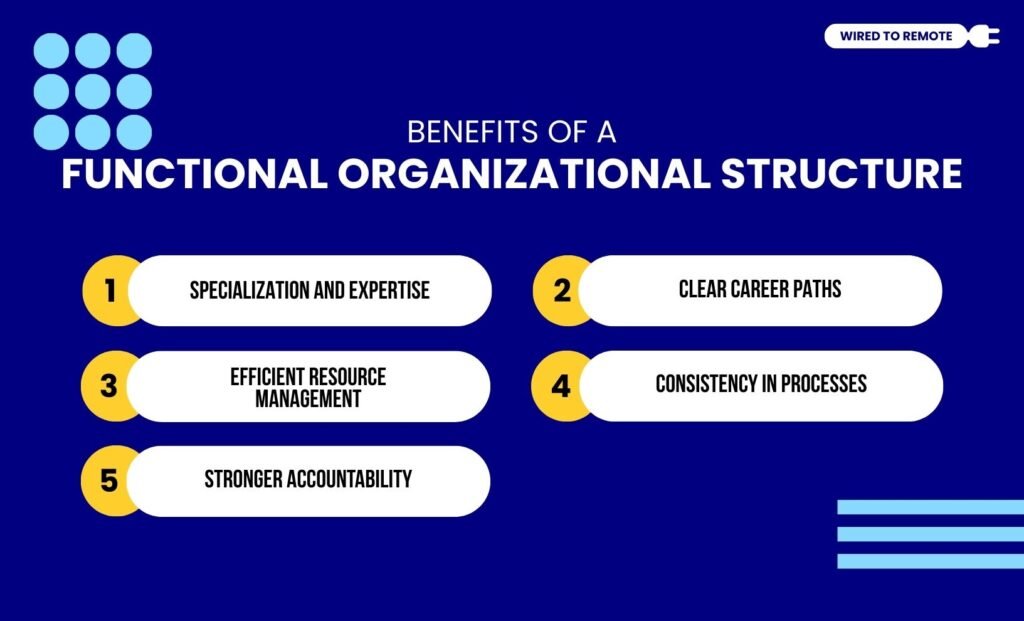
1. Specialization And Expertise:
Grouping employees by skill allows them to focus on what they do best. Over time, this specialization helps teams develop deep knowledge and improve the quality of their work.
For instance, a marketing team dedicated solely to brand growth can refine its strategies without being distracted by unrelated tasks.
2. Clear Career Paths:
Employees in a functional structure often see a clear progression within their department.
A junior analyst can grow into a senior analyst, manager, and eventually a department head within the same function.
This clarity helps organizations retain talent and encourages professional development.
3. Efficient Resource Management:
Department heads can allocate resources more effectively because they understand the needs of their specific function.
Budget planning, training programs, and technology investments can be tailored to support departmental goals.
4. Consistency In Processes:
Since teams are grouped by expertise, they can establish standardized procedures for their work. This consistency reduces errors and improves efficiency across the organization.
5. Stronger Accountability:
A functional organizational structure makes it easy to identify who is responsible for specific outcomes.
If financial reports are delayed, the issue likely sits within the finance department rather than being scattered across multiple teams.
Challenges Of A Functional Organizational Structure

Despite its strengths, this model is not without limitations. Of course, this is not an entirely perfect structure, and my work life is not always peaceful.
While I can guarantee that your output and productivity will be excellent with a functional structure, things aren’t always going to be balanced and peaceful.
Communication issues, unnecessary delays, and insecurities are just some of the problems.
Also, chances are, you will be facing all of them because each limitation is related to the other. Insecurities can lead to communication silos, which in turn can cause unnecessary delays.
1. Communication Silos:
Departments may become too focused on their own goals, which can create barriers between teams.
Personally, I have faced a lot of communication issues in the company when I first came in.
So, I came from a vastly different background – both professionally and academically – and I just couldn’t break the ice.
I would come off as too strong and aggressive. As a result, I had to work on my interpersonal skills to ensure that I can work with team members and other departments smoothly.
Four years later, I am comfortable here with my team and colleagues. Of course, we still face communication issues, but nothing that a transparent conversation cannot solve.
Also, marketing, sales, and operations might struggle to coordinate if communication channels are weak.
2. Slower Decision-Making:
When projects require input from multiple departments, decisions can take longer. Like I was just saying, each issue is related to the other.
Once you experience a problem in communicating smoothly with someone, especially across teams or departments, it will cause unnecessary delays.
More often than not, these delays slow down decision-making significantly – this triggers a chain of delays, TBH.
Also, requests often need approval from several managers before moving forward.
3. Limited Cross-Functional Collaboration:
Employees may have fewer opportunities to work outside their department, which can limit innovation and a broader understanding of the business.
Also, many organizations address these issues by encouraging cross-department meetings and collaborative projects.
Examples Of Functional Organizational Structure In Practice
Most traditional businesses rely on some form of functional structure.
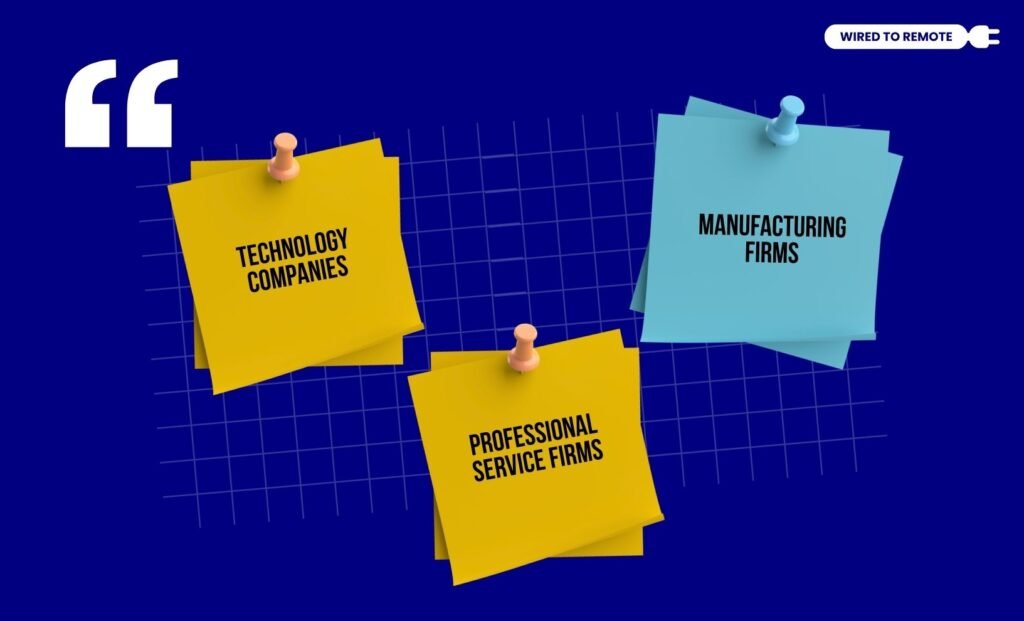
A. Technology Companies:
Software companies often organize teams into engineering, product management, marketing, customer support, and finance departments.
Also, each unit focuses on a specific aspect of building and selling the product.
B. Manufacturing Firms:
Manufacturers typically divide operations into production, quality control, supply chain management, and sales functions.
Moreover, this ensures every stage of the production process is handled by specialists.
C. Professional Service Firms:
Law firms, consulting agencies, and accounting firms often group employees by expertise, such as legal research, client services, finance, and administration.
Best Practices For Implementing A Functional Organizational Structure
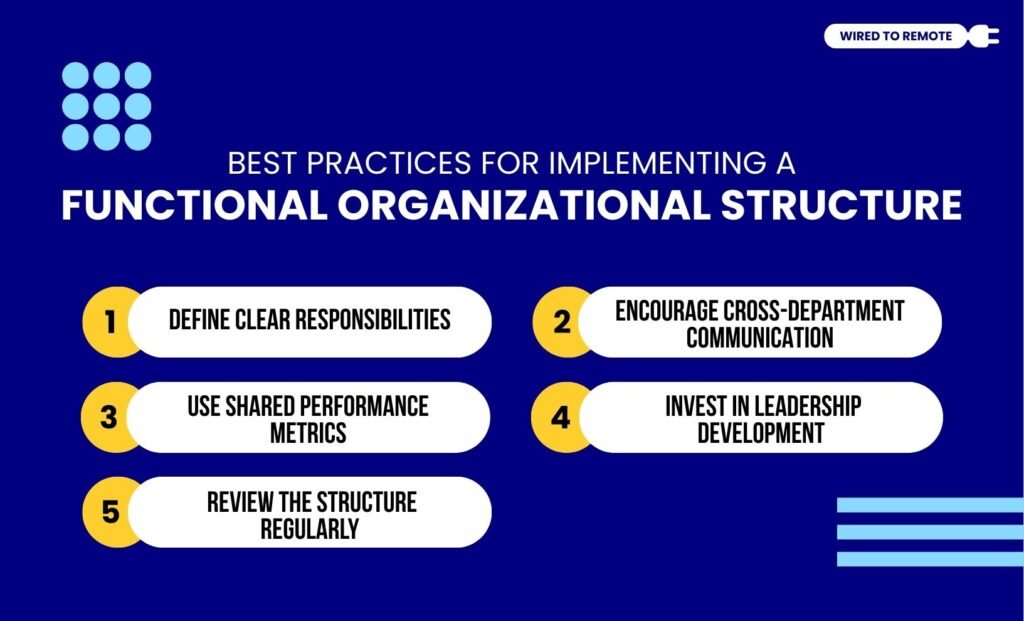
Adopting a functional structure requires careful planning. So, companies that implement it successfully usually follow a few key practices.
1. Define Clear Responsibilities:
Each department should have well-defined roles and measurable objectives.
When responsibilities are clearly documented, employees understand their contributions and avoid duplicating work.
2. Encourage Cross-Department Communication:
Regular meetings between departments can reduce silos.
Many companies create cross-functional teams for major projects so that different functions collaborate more effectively.
3. Use Shared Performance Metrics:
Instead of evaluating departments only on their own goals, organizations should include metrics that require cooperation.
For example, marketing and sales might share responsibility for revenue growth.
4. Invest In Leadership Development:
Department heads play a crucial role in a functional structure. Strong leadership training helps managers guide their teams while aligning with the company’s broader strategy.
5. Review The Structure Regularly:
As companies grow, their organizational needs change.
Periodically reviewing the functional organizational structure ensures it still supports the organization’s goals and operational demands.
When Should A Company Use A Functional Organizational Structure?
This model works best for organizations that:
- Have clearly defined roles and processes.
- Focus on operational efficiency and expertise.
- Operate with stable product lines or services.
- Need strong departmental leadership.
Small startups sometimes begin with a flat structure but transition to a functional model as they scale and require more specialized teams.
Key Takeaway:
I have understood the importance of a functional organizational structure in a span of 8 years. Needless to say, the first four years were very tough.
And I forever remember it – but four years ago, everything changed, thanks to Viacon’s functional structure.
But the truth is, I had to learn it the hard way.
Also, what worked for me might not work for you. And no structure or hierarchy is perfect, so don’t expect things to change when you are not putting in the necessary effort.
For me, this is the most dependable way to run a company, and I’ll always prefer working in a company that follows a functional structure.
What about you? Do you have similar experiences, or are you yet to experience corporate life? Tell me all about it – comment or DM!



Leave A Comment