Interpersonal skills affect almost every part of your life. At work, they shape how you communicate, collaborate, and grow.
And if someone told me about this eight years ago, I wouldn’t believe it – trust me on this one. Outside work, they influence relationships, trust, and everyday interactions.
Most people focus on technical skills. That’s a mistake. Because in real situations, people don’t just judge what you know. They judge how you behave.
What Are Interpersonal Skills?
Interpersonal skills are the abilities you use to interact with others.
They include how you:
- Communicate your thoughts.
- Listen to others.
- Respond in conversations.
- Handle disagreements.
- Build relationships over time.
Also, these skills are not fixed. You learn them through experience. And yes, you can improve them with practice.
Why Are Interpersonal Skills Important?
So, here’s the reality – most workplace issues are not technical.
They come from:
- Unclear Communication.
- Misunderstandings.
- Poor emotional control.
- Lack of listening
For example, a team project can fail even when everyone is skilled. Why? Because no one aligned properly.
Moreover, strong interpersonal skills help you:
- Builds trust faster.
- Avoid unnecessary conflict.
- Work better in teams.
- Handle feedback without reacting badly.
- Influence people without forcing it.
And over time, these small advantages compound.
Key Interpersonal Skills With Examples:
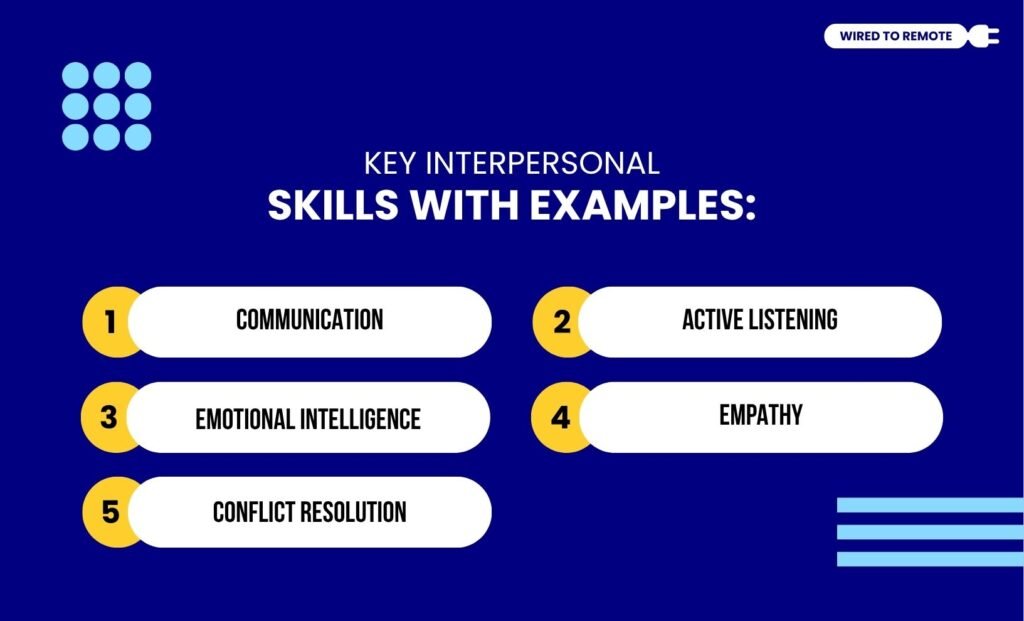
So, let’s break this down into practical areas.
1. Communication:
Clear communication saves time. Also, it prevents mistakes. Instead of saying, “I’ll do it soon,” say, “I’ll send it by 5 PM today.”
Small change. Big difference.
2. Active Listening:
Most people listen to reply. Not to understand.
So, active listening means:
- Not interrupting.
- Asking follow-up questions.
- Acknowledging what the other person said.
Also, it makes people feel heard, and that alone improves relationships.
3. Emotional Intelligence:
You won’t always agree with people. That’s normal. But reacting instantly, especially in frustration, creates problems.
Pause. Think. Then respond.
Also, this one habit can change how people perceive you.
4. Empathy:
Empathy is not about agreeing. It’s about understanding. For example, if a teammate misses a deadline, you can either blame them or ask what went wrong.
That approach changes the tone of the conversation.
5. Conflict Resolution:
So, the thing is, avoiding conflict doesn’t solve anything. Instead, address issues early and focus on the problem, not the person.
Also, keep your tone neutral – when handled well, conflict can actually improve trust.
Common Interpersonal Skill Mistakes:
Many people don’t realize where they go wrong. And that is where things tend to get really crazy.
So, some of the most common patterns in this context are:
- Interrupting mid-conversation.
- Assuming intent without asking.
- Over-explaining simple points.
- Ignoring feedback.
- Trying to dominate discussions.
These habits slowly damage your credibility.
How To Improve Interpersonal Skills?
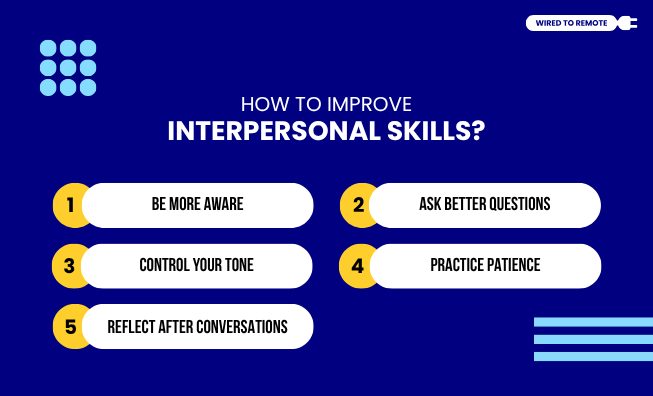
You don’t need to overhaul everything at once. So, how about starting with a few simple actions?
- Be more aware: Notice how people react when you speak – this feedback really matters.
- Ask better questions: Instead of quick replies, ask one extra question. Why? Because it deepens conversations.
- Control your tone: Words matter, but tone matters more.
- Practice patience: Let people finish, even if you already know what they’ll say.
- Reflect after conversations: Ask yourself, “What went well, and what didn’t?”
So, this habit alone speeds up improvement – don’t believe me? Try it out for real.
Interpersonal Skills In The Workplace:
In professional settings, these skills become even more important.
As a result, they affect:
- Teamwork and collaboration.
- Leadership potential.
- Client relationships.
- Performance reviews.
Moreover, managers often promote people they trust to handle others well. Not just those with the best technical output.
The Two Layers Of Interpersonal Skills:
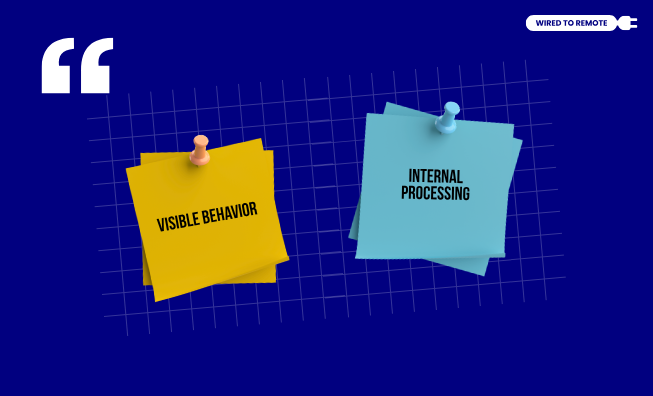
People often think interpersonal skills are just about communication. That’s only the surface.
As a result, there are only two layers:
1. Visible Behavior:
What people can see and hear:
- Your words.
- Your tone.
- How you respond in conversations
- Your body language
2. Internal processing:
What’s happening inside:
- Your assumptions.
- Your emotional reactions.
- How quickly you judge others.
- Your patience level.
So, here’s the catch – if the internal part is off, the external part eventually shows it. Also, you can’t fake good interpersonal skills for long.
Why Smart People Still Struggle With People?
This is more common than you think. Someone can be highly skilled, logical, and hardworking, and still struggle in teams.
Why? Because they:
- Focus only on outcomes, not people.
- Dismiss others’ input too quickly.
- Communicate in a blunt or unclear way.
- Lack of awareness of how they come across
And then they wonder why things feel “off.”
The issue isn’t competence. Instead, it’s a connection.
The Role Of Perception (This Changes Everything)
So, here’s something most people ignore: people react to how they perceive you, not who you think you are.
As a result, you might think, “I’m being direct,” but others may feel, “This person is rude.”
Similarly, you might think, “I’m just quiet,” while others may assume, “They’re not interested.”
That gap between intention and perception causes friction. So improving interpersonal skills is not just about what you do – rather, it’s about how it lands.
Micro-Behaviors That Make A Big Difference:
Small actions. Big impact. Moreover, these are easy to miss, but they shape how people feel around you.
1. Pausing before replying: It shows control and thoughtfulness – not a reaction.
2. Using names in conversation: Feels more personal and builds a quick connection.
3. Nodding or acknowledging: Signals that you’re engaged.
4. Not checking your phone mid-conversation: Sounds obvious, but it is rarely followed.
5. Matching tone and energy: If someone is serious, don’t joke immediately. However, if they’re casual, don’t sound overly formal.
So, these might be subtle behavioral changes. But people notice, and you will go a long way in improving your interpersonal skills.
Interpersonal Skills And Career Growth:
Let’s be direct – this affects money and growth. You can be great at your job. But if people find you difficult to work with, growth slows down.
Why? Because roles with higher pay involve:
- Managing people.
- Handling clients.
- Making decisions under pressure.
All of these require strong interpersonal skills.
Alos, in many cases, people don’t get promoted because of how they work with others. Not what they produce.
The Balance: Being Nice Vs Being Effective
A common misunderstanding that I would like to clear up.
So, interpersonal skills do not mean:
- Always agreeing.
- Avoiding difficult conversations.
- Trying to please everyone
That’s not effectiveness. Instead, it’s avoidance.
As a result, your real skill is:
- Being clear without being harsh.
- Being honest without being disrespectful.
For example, instead of saying, “This is wrong,” you can say, “I see a few issues here. Let’s fix them.” While both are essentially the same messages, each has a different impact.
You Need Interpersonal Skills To Grow!
Interpersonal skills are not optional anymore. Instead, they are part of how you work and interact every day.
You don’t need to be perfect. But you do need to improve consistently because over time, the way you deal with people becomes your biggest advantage.



Leave A Comment