- Candidate screening is a fundamental part of the hiring process. It helps recruiters to evaluate the candidates’ abilities and qualifications for the job role.
- Since it helps in finding the best-fitting candidates, it reduces employee turnover, improves organizational performance, enhances candidate experience, and ensures employee retention.
- Best practices for candidate screening include— monitored AI-driven resume screening, standardized screening criteria for candidate evaluation, prioritized data security, and ensured transparency and unbiased screening.
Hiring talent for diverse roles is not about simply filling the positions with candidates. It is much more than that.
Since a hired candidate directly impacts how the business works, hiring the wrong person can immensely affect the organization’s success.
According to the report from Phenom—
74% of employers admit they’ve hired the wrong person for a role, leading to wasted resources, lower productivity, and increased turnover.
So, recruiters need to find the ideal candidate for the right role. And that can only be done with proper candidate screening.
But manually screening through countless applications can be difficult. That’s where AI recruitment tools come into play.
With the advanced data analytics model, these tools help make faster and accurate recruitment decisions. That is, improving the quality of hire and the efficiency of the process.
So, if you are wondering how AI models, best practices, and trends help with candidate screening, I have got you covered.
In this blog, I am going to explore the diverse nuances of the remote candidate screening process by focusing on—
- How it works,
- Its key benefits and challenges,
- Some of the best practices, and more.
So, come dive right into it!
How Does The Candidate Screening Process Work?
First things first, candidate screening is the fundamental part of the hiring process.
That is, it revolves around the process of determining whether the applicants are qualified enough for the job roles. So, remote recruiters can find the best-fitting candidates.
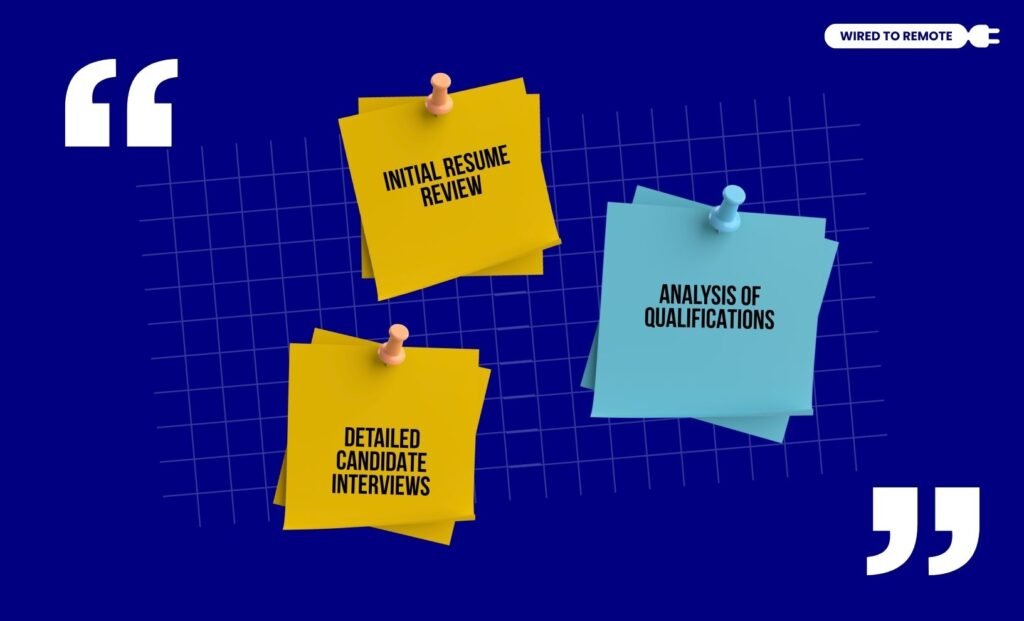
Moreover, the process has several steps where the candidate’s skills, experience, and qualifications are matched with the eligibility criteria for the job role. So, the steps include—
- Initial Resume Review: Firstly, the resumes of the potential candidates are tallied to filter the ones who meet the job requirements. So, the recruiters analyze the relevant skill sets, work experience, and conduct background checks.
- Analysis Of Qualifications: Then, the selected candidates are assessed in depth. That is, the recruiters examine their qualifications through online assessments, phone interviews, or reviewing work samples.
- Detailed Candidate Interviews: Finally, after the qualification assessments, the candidates who are shortlisted go through a detailed interview round. So, the recruiters review their socials, references, and interviews to gather insights about their professional attitude.
What Are The Common Candidate Screening Methods And Tools?
With AI-driven HR technology, recruiters combine advanced algorithms with modern methods for candidate screening.
This way, they can streamline the process and make efficient recruitment decisions.
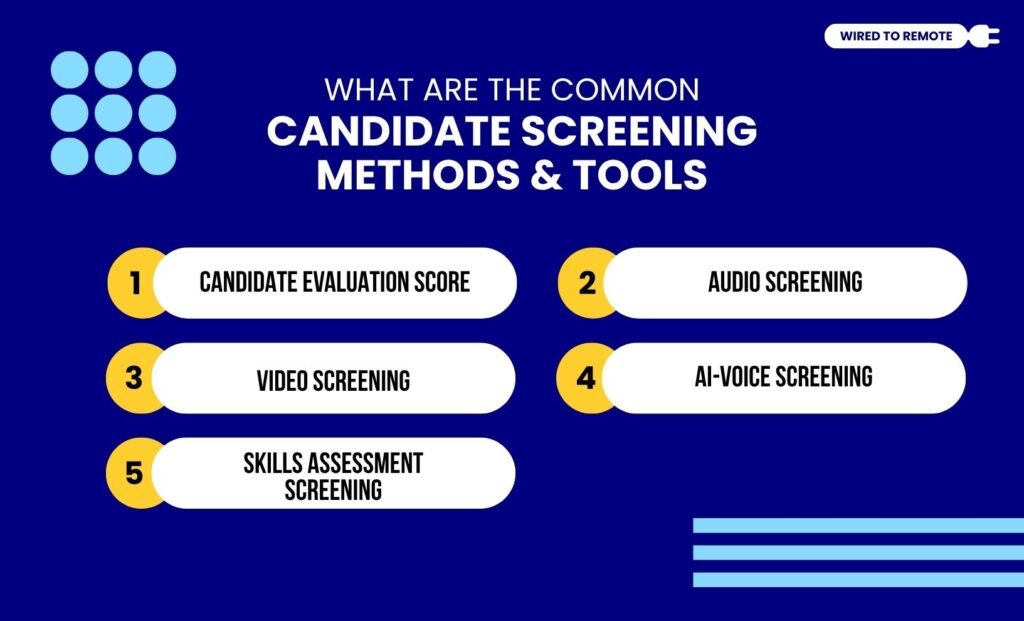
So, here are some of the common resume screening tools and background check services used in the modern recruitment—
1. Candidate Evaluation Score
Firstly, the AI-driven recruitment tools automate the repetitive screening tasks and help with analyzing a large volume of applications.
Then, it provides a specific score to the candidates. So, it is easier to segregate between ideal and non-fit candidates. And, the recruiters can make faster hiring decisions.
2. Audio Screening
Moreover, recruiters use the audio screening method to get a quick impression of the candidates before scheduling an interview round with them. So, it’s a great way to evaluate their communication skills.
3. Video Screening
Similarly, a video screening is also conducted to let the candidates present themselves the right way. Moreover, through the video interview, recruiters essentially evaluate their personalities, work motivations, and professional experience.
4. AI-Voice Screening
In addition to this, recruiters use the AI-voice screening method that personalizes each interview based on the specific interactions. So, the AI chatbots conduct a full-on initial interview round to evaluate the potential qualification of the candidates.
5. Skills Assessment Screening
Finally, the AI-driven resume screening tools and background check services are used to identify the best-fitting candidates. Moreover, the AI models provide assessment techniques that analyze the behavior, potential, and skills of the applicants.
Key Benefits Of AI In Candidate Screening
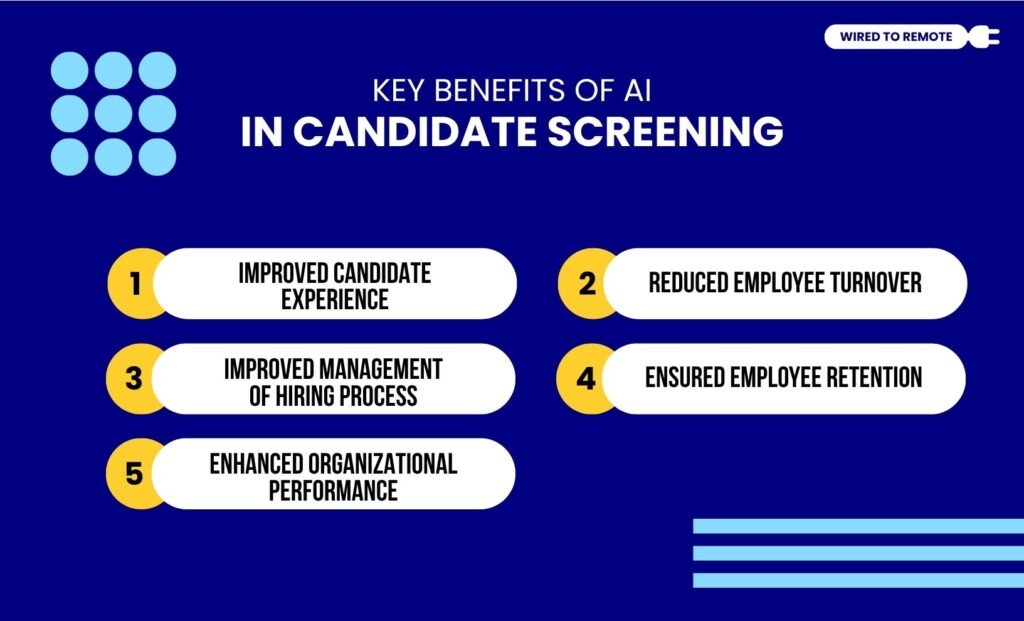
Since a lot of candidates apply for a single job role, it is vital to screen the applicants to hire the right one. And a well-organized screening process helps find the ideal ones in a jiffy.
Moreover, it helps improve the recruitment process, quality of hire, and candidate experience. So, some of the key benefits of having an AI-driven screening process for candidates include—
1. Improved Candidate Experience
With a properly structured candidate screening process, recruiters can improve the overall candidate experience with the application process.
That is, using AI models, recruiters can clearly mention the job requirements and create fair assessment methods. So, the applicants can go through the process with trust and confidence in the employers.
2. Reduced Employee Turnover
Given that a well-structured screening process helps find the right candidate, this reduces the employee turnover rate.
According to the report by Thomas—
50% of organizations measure the average quality-of-hire metric based on the on-the-job performance of new recruits, 49% take into consideration the rate of turnover, and 43% depend on the satisfaction levels of hiring managers to measure the quality of hire.
So, when the hired candidate and the job role match, they feel satisfied with the job role and stay in the company in the long run. That is, the overall turnover rate is dynamically reduced.
3. Improved Management Of Hiring Process
Hiring a candidate is not a simple task. It includes a lot of steps and complex processes. So, an organized screening process helps in efficiently managing the hiring procedure.
Moreover, the AI models handle all the repetitive tasks. So, the recruiters can focus on priority activities. As the report from Phenom claims—
Organizations that integrate these tools see a reduction in manual evaluation time by up to 40%, significantly accelerating the hiring process.
4. Ensured Employee Retention
Since the right candidate is identified through the screening process, they tend to stay in the company for the long term. That is, the chosen candidate fits into the job role like two missing puzzle pieces.
So, when the candidate suits the work role, responsibilities, and company culture perfectly, they feel more satisfied with the job. This makes them remain with the company and improves employee retention.
5. Enhanced Organizational Performance
In addition to this, the right hire improves the productivity and efficiency of the team. That is, their contribution to the work enhances the overall organizational performance.
According to the Abstrakt report on candidate screening—
Good screening makes sure that the candidates who make it to the interview stage are likely to do well in the job, which improves overall hiring success.
Unique Challenges In Remote Candidate Screening
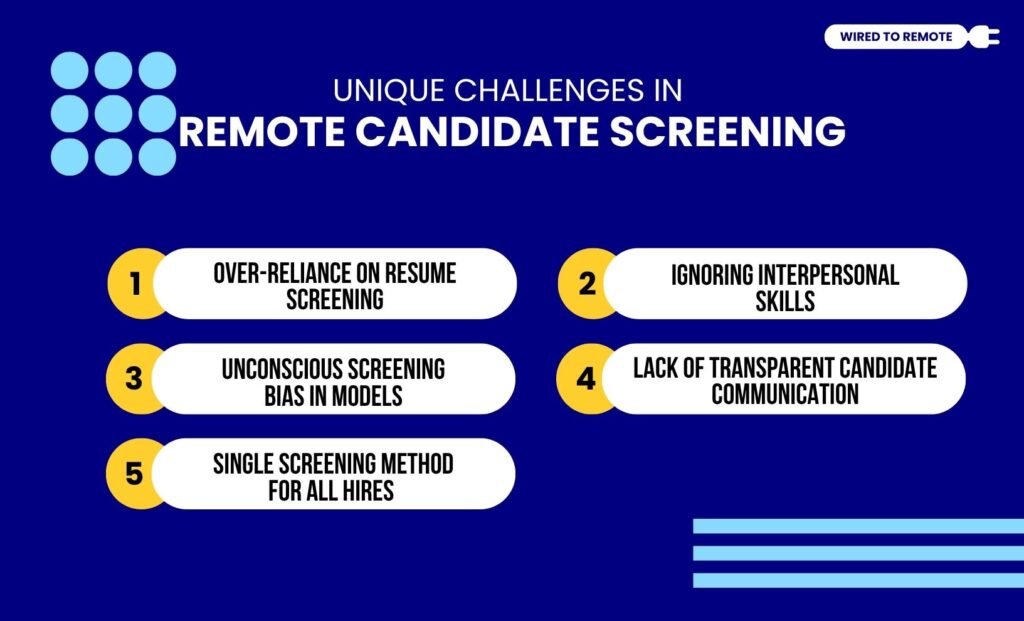
Even though AI in candidate screening provides massive benefits, remote recruiters face some unique challenges while implementing it.
So, here are some of these challenges and how to overcome them—
· Over-reliance On Resume Screening
Generally, candidates exaggerate their experience and skills on their resumes to get selected. So, completely relying on them while screening candidates can lead to bad hires.
To avoid this, remote recruiters can conduct AI-powered assessments to test out the practical skills and qualifications. Moreover, they can review the work samples to accurately measure their potential.
· Ignoring Interpersonal Skills
Solely prioritizing the technical skills for the job can affect the quality of hire and oftentimes result in employee turnover. So, recruiters need to analyze the interpersonal skills, too.
That is, they should conduct behavioral assessments to evaluate the candidates’ abilities. This way, recruiters can get a first-hand understanding of the professional attitude of the applicants.
· Unconscious Screening Bias In Models
When there is no properly structured screening process, unconscious bias can occur, which affects the hiring decisions.
So, recruiters need to manually monitor the AI models to detect any biased results. Also, they should follow a structured approach to find the perfectly fitting candidate.
· Lack Of Transparent Candidate Communication
Candidates prefer to have transparent communications before joining a company. That is, a lack of transparency in the screening process and job description can impact the recruitment.
So, recruiters need to use AI models for initial automated communications, sending timely updates, and keeping the candidate engaged in the process. This way, they can mitigate poor communication issues.
· Single Screening Method For All Hires
Given that all hirings are not the same, a generic standardized screening criterion cannot perform well for all kinds of hiring. So, it is essential to tailor each screening approach based on the hiring requirements.
And, recruiters can use the AI models to explore personalized recruitment strategies and screening methods for different kinds of hiring. This way, they can find the right one with custom screening.
Best Practices To Improve Candidate Screening For Effective Hiring
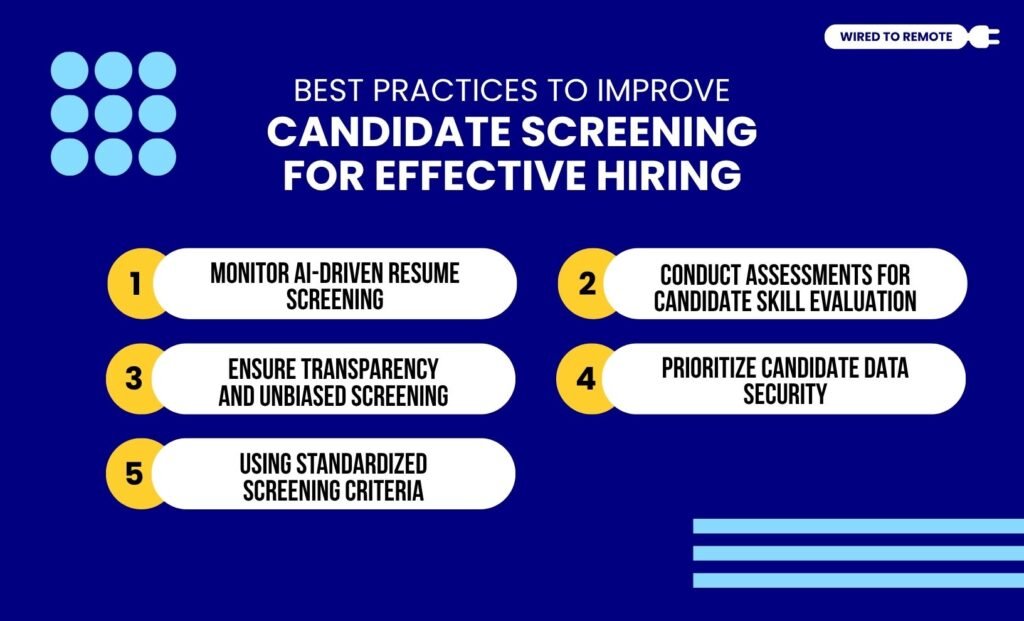
To ensure the successful screening of the right candidates, here are some best practices for using AI in recruitment—
- Monitor AI-driven Resume Screening: Along with the resume screening tools, recruiters should provide human monitoring of the process. So, the right candidates don’t get filtered out by the AI models.
- Conduct Assessments For Candidate Skill Evaluation: Instead of simply relying on the candidate’s resume, recruiters should conduct skill and qualification assessments. This way, recruiters can test the candidate’s abilities.
According to the Indeed report—
You can also use aptitude tests, which are exams that measure candidates’ skills and knowledge in specific areas. You can use aptitude tests that relate specifically to the requirements of the position you’re trying to fill. Asking candidates to take these tests can help you make sure they have the basic qualifications to succeed in the position.
- Ensure Transparency And Unbiased Screening: Additionally, recruiters should clearly explain how AI models will use candidate data for the hiring process. Also, regularly monitoring the AI tools can help recruiters find biased results. So, they can modify the model and get unbiased screening results.
- Prioritize Candidate Data Security: Since the HR department collects a large volume of candidate data, it should implement proper data security systems. So, the sensitive data can be protected and used properly by the AI recruitment technology.
- Using Standardized Screening Criteria: To ensure that the candidates are evaluated on a fair system, recruiters need to use the standardized screening criteria and procedure. So, all the methods for a specific role are the same for every candidate.
What Are The Future Trends Of AI-Driven Candidate Screening?
As technology advances, AI in recruitment indicates a promising future ahead. Now, recruiters can combine human and AI models to develop hybrid hiring strategies.
That is, by combining automated candidate screening and data analysis with human monitoring, recruiters are streamlining the workflow. So, making the process fast and efficient.
Moreover, the data insights from the AI predictive analytics can help in understanding the hiring trends. So, recruiters can modify their strategies based on these insights.
Now, with this complete guide on candidate screening, anyone can find their best hire.
Just use these best practices and implement the modern recruitment tools and strategies. And, you too can get the best candidate in a flash.
FAQs
Here are some common questions about candidate screening with AI recruitment tools that you can check.
To explain simply, candidate screening refers to the process of analyzing the large volumes of applications and finding the right candidate for the job role.
That is, it helps recruiters to match the candidates’ skills, relevant work experience, and qualifications with the job descriptions properly.
Technically, the first step of the hiring process is candidate screening. So, it is used to filter out non-potential candidates and shortlist the best-fitting ones for a job role.
Moreover, a well-structured candidate screening process provides a fair and transparent evaluation system. Also, it helps in matching the right candidate with the right role, which reduces employee turnover.
Some of the common methods used for screening potential candidates include—
• Initial resume and cover letter screening
• Audio and video screening
• Skills and suitability tests screening
• Background checks and interpersonal skills screening.
When recruiters implement AI in the hiring process, it helps improve the candidate screening process.
That is, by automating administrative processes, offering personalized communication, scheduling interviews, and organizing tests, AI models boost the overall efficiency.
Some of the core challenges of candidate screening include—
• Managing high volumes of candidate applications
• Over-reliance on the resume screening process
• Ignoring the interpersonal skills evaluation
• Non-transparent and biased screening process
• Using a single method for all kinds of hiring.
Biased candidate screening can be easily resolved by hiding the identity of the applicants, using a standardized evaluation method, and having diverse members in the hiring team.
Also, monitoring the AI models regularly can reduce the unconscious bias of the AI technology. So, the recruiters can evaluate the candidates through a fair and objective method.
Some of the common tools that are used for candidate screening include— Applicant Tracking System (ATS), AI-driven hiring platforms, Testing Tools, AI chatbots for initial interviews, and video interviewing tools.
Generally, candidates’ behavior and interpersonal skills assessments show whether they are culturally fit for the company.
So, recruiters can conduct such assessments or ask scenario-based questions during interviews to understand if the candidate is suitable for the company culture.
To ensure that you are complying with the legality of candidate screening, here are some of the legal considerations to keep in mind—
• Using a standardized screening method for fair and objective candidate selection.
• Providing data security measures to store and use candidate-sensitive data.
• Documenting transparently all the hiring details— process, job description, roles and responsibilities, and eligibility criteria.
• Avoiding discrimination of any kind among the candidates.
There are a few ways to improve the candidate screening process, some of which include—
• Clearly establishing the candidate screening approach and method
• Implementing automation along with human monitoring
• Using AI models to optimize the process and speed up the decision-making
• Streamlining the workflow of the hiring process.


Leave A Comment