
Getting a remote job offer with a good paycheck in 2025 is not that hard. Now, countless job portals and websites are opening doors to the perfect work-life balance with diverse work-from-home roles.
But with every light, emerges a shadow. And, the brighter the light gets, the darker the shadow’s intensity becomes.
Similarly, this golden opportunity has increased scams and fake jobs. Turning simple remote job roles into crafty money laundering schemes and online fraud.
Now, the job market is filled with both legitimate and illegitimate remote jobs. Making job seekers confused and doubtful about the legitimacy of any remote roles they come across.
So, the question is— “How to know if a remote job is legit?” Well, no need to look any further, your remote buddy is here to save the day.
After being in the remote work world for a long time, I have seen how scammers try to disguise fake jobs as real ones.
So, today, I have brought you a guide to identify the fake ones from the job market by focusing on—
- How the remote landscape changed,
- Common red flags in remote jobs to look out for,
- A verification checklist to find legitimate jobs, and more.
So, come dive right in!
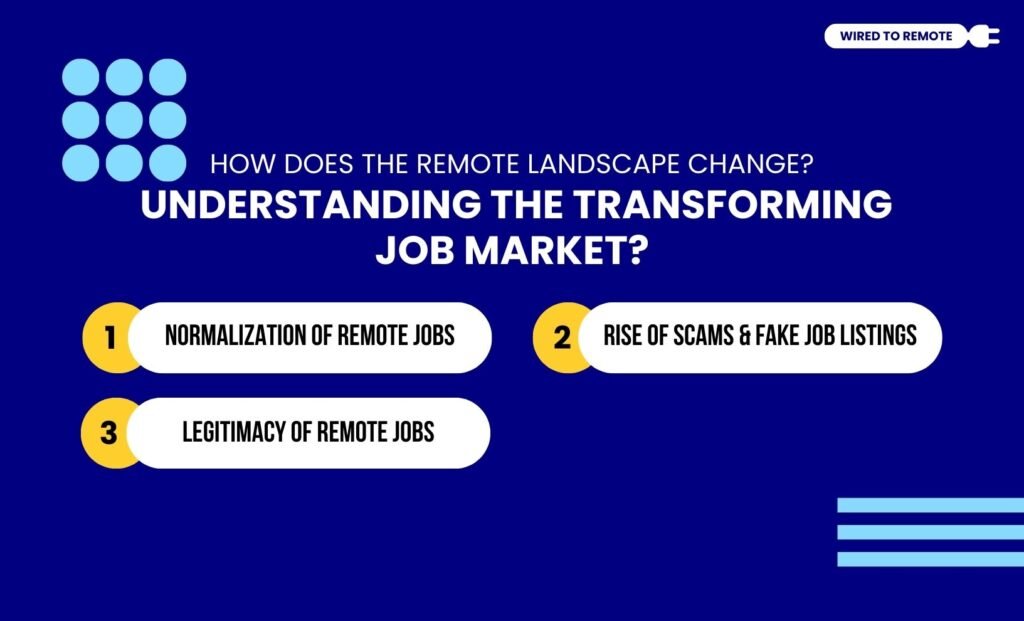
How Does The Remote Landscape Change? Understanding The Transforming Job Market
Over the years, the remote job market has drastically changed. Now, new opportunities and flexible work hours have changed how the workplace operates completely.
1. Normalization Of Remote Jobs
To be honest, post the 2020 Pandemic, remote work skyrocketed. That is, it clearly expanded its reach, making global companies from diverse industries normalize work-from-home jobs.
And, by the end of 2025, “56% of global companies allow remote work, while 16% of global companies are fully remote” (Novoresume).
So, the remote work culture has been completely normalized in the corporate world. Now, more and more people are seeking hybrid or work-from-home roles to kickstart their remote careers.
2. Rise Of Scams And Fake Job Listings
As the remote job market witnessed some traction, scammers emerged with their enticing job postings to target freshers and inexperienced netizens.
They offered extremely easy job roles for massive salary brackets. Making individuals fall into the trap.
Moreover, in the name of training for the job roles, they scammed people across diverse sectors. So, naturally, job seekers are doubtful about any out-of-the-world remote opportunities.
3. Legitimacy Of Remote Jobs
Now, in 2026, the definition of a legit remote job has completely changed.
That is, a remote work opportunity becomes legit when the company has a credible online presence, offers fair paychecks, and has a normal hiring process.
Moreover, legitimate remote jobs provide verified details about the company, taxes, job description, and the type of employment. So, candidates can easily trust them.
How To Spot A Fake Remote Job? Looking Out For The Red Flags!
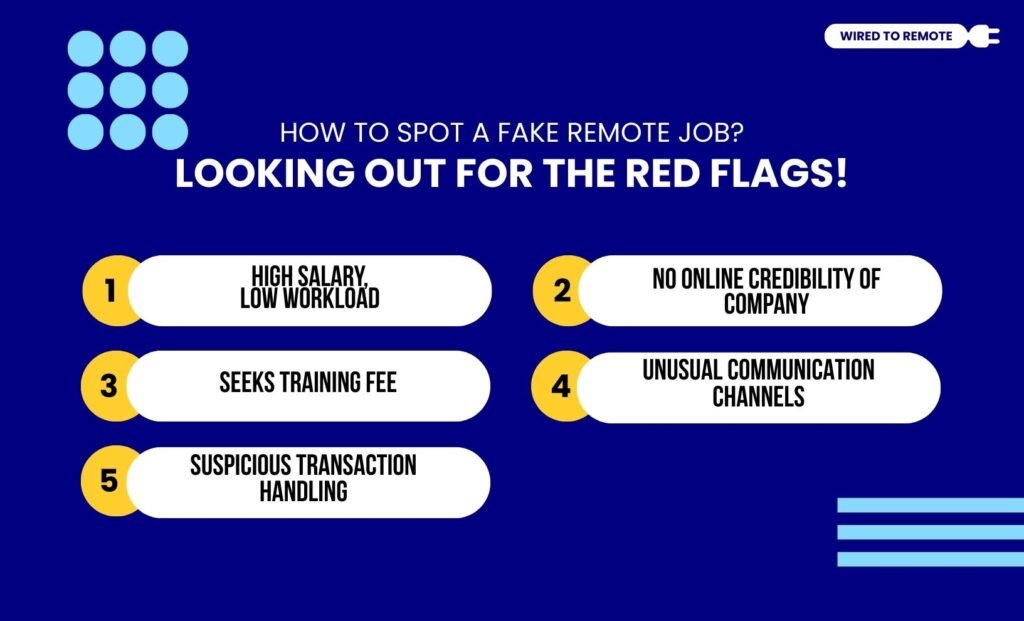
Identifying the scams from the legit remote jobs is the first step to avoiding fake jobs. So, here are the red flags in the remote work roles that candidates should keep an eye out for—
- High Salary, Low Workload: Firstly, the job description will be vague and provide high salary ranges for minimal workloads.
- No Online Credibility Of Company: Moreover, fake jobs have no credible company information online. So, candidates won’t find any news, official websites, or verified information.
- Seeks Training Fee: Additionally, most scammers ask for training fees or joining fees that they promise to reimburse once the candidate is onboarded.
- Unusual Communication Channels: Also, fake job providers use unusual email IDs and other communication channels to contact candidates, conduct interviews, and onboard.
- Suspicious Transaction Handling: Finally, scamming roles or fake remote work opportunities offer candidates suspicious money handling or account management roles.
As the report from US Norton highlights— “If the email is from a generic domain name, the job isn’t listed on the official company website, or the recruiter uses high-pressure tactics or unprofessional communication, don’t even accept an interview”.
How To Know If A Remote Job Is Legit? A Verification Checklist!
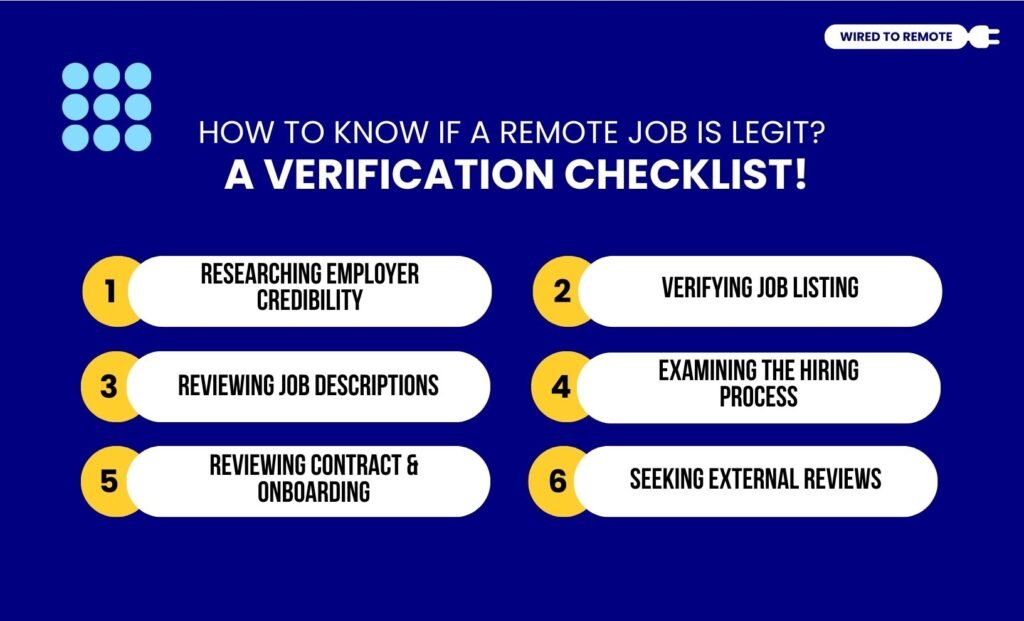
But not all remote jobs are scams, right? So, how to know which are the legitimate ones? Well, here I have created a simple checklist for job seekers to verify the legitimacy of a remote job—
1. Researching Employer Credibility
Firstly, check the credibility of the employer. That is, visit the official website of the company, LinkedIn pages, and social media handles.
From these places, collect the information about the company culture and news. So, candidates can have a clear idea about whether it’s a legitimate company or not.
2. Verifying Job Listing
Now, the next part is to check if the job listing is verified. So, if candidates can find the actual job posting on the company’s Careers page or an official posting on their LinkedIn page, the job posting can be considered legitimate.
As the report from US Norton highlights— “Legitimate employers make essential details, like job descriptions, application instructions, and company background, freely available on their website or through direct contact via phone or email.”
3. Reviewing Job Descriptions
Apart from this, candidates need to review the job descriptions. That is, too unrealistic or vague descriptions are a clear indication that the job is a scam.
So, check the job details, roles, and responsibilities for the position to see if something is fishy. But if the compensation package and the workload follow industry standards, then rest assured, the job is legit.
4. Examining The Hiring Process
Now, one of the most important aspects of a job posting is its hiring process. That is, how the recruiter is contacting the candidate, screening them, and conducting the interview rounds.
So, check that the remote recruiters are using legitimate processes to hire candidates the right way. Then, the remote job can be considered a legit one.
5. Reviewing Contract And Onboarding
Additionally, candidates should be aware of the intricacies of the terms and conditions in the contract. Since most legitimate companies send a written contract to candidates, read through the lines before signing.
Also, clarify doubts about the payment structure and the onboarding process. This way, you can identify the scammers from the legit ones in the job market.
6. Seeking External Reviews
Finally, a legitimate company will have employee reviews on job portals. So, look through the reviews from previous employees to get a clear idea about whether the company is a fraud or a legitimate one.
Moreover, these external reviews can help in exposing the company culture at the earliest. So, this can also help candidates make informed decisions about the remote role.
Things To Consider While Applying For A Legit Remote Job
Now that you know how scammers are flooding the remote job portals, you need to be cautious while applying for them. So, here are a few things to keep in mind to ensure you are applying for legit remote jobs—
- Firstly, research the company to find any unusual details or suspicious activity listed on the internet.
- Moreover, avoid sharing personal and sensitive information on job portals that have no credibility.
- Alternatively, avoid sending money or paying a recruiter for any kind of training or joining procedures.
- Finally, never respond to unprofessional emails or contacts who conduct interviews through messaging apps.
Now, by considering these few things, it becomes easier for you to find legit remote opportunities.
So, what’s the wait for? Go through the job portals and apply for legit remote roles to kickstart your career in the digital nomad world.
FAQs
Here, I have brought you a complete list of all the questions around remote job scams that most job seekers look for.
Honestly, just because a remote job is offered by a small startup company, it doesn’t necessarily need to be fake or a scam. But, since there is little information on the internet about the company. So, you need to verify the company’s legitimacy through every possible means. That is, you need to vet the recruiter through their LinkedIn profile and the company’s domain before determining if it is legit. This way, you can avoid being scammed.
Generally, many small startups have the BYOD model— Bring Your Own Device. So, simply requiring you to use your own laptop or equipment for the job is not always a red flag. But if the work involves handling sensitive company data, security activities, or software updates, then they should be providing you with a device. So, for a full-time role with sensitive data handling, if the company requires you to use your own device, then it is a sure red flag.
Since the cryptocurrency market lacks potential legal and financial protections, it is a risky method of payment. Moreover, the cryptocurrency pricing is extremely volatile. Making it the perfect palace for scams and fake payments. So, when a remote job pays in cryptocurrency, it can open doors for illegitimate transactions and potential scams. That’s why it is better to avoid these remote job roles.
Generally, there is no specific number of rounds for any remote job. That is, based on the job role, the number of interview rounds can range from 3 to 5. Moreover, the seniority of the job further determines the number of interview rounds. So, there is no fixed number of interview rounds that distinguishes legit jobs from the illegitimate ones.
Yes, absolutely. You can apply for remote jobs from any country. But you need to take the precautions to verify the legitimacy of the job before signing the contract. Since foreign companies have different regional legal and financial protocols, it is better to know about them before applying for the job. Additionally, check for the legitimacy of the job listing to avoid scams and fake jobs.



Leave A Comment