
Childbirth is not a simple process. It requires immense patience and tolerance to pain. And, returning to work right after this life-altering experience can be the most difficult phase for mothers.
To recover from the physical and mental challenges of pregnancy, many countries have issued laws for providing maternity leave to new moms.
And, Philippines is not staying behind. With its Republic Act 11210, it has introduced the Expanded Maternity Leave Law for both on-site and remote working women.
Under this act, working moms get 105 days of maternity leave to recover from the stress of their pregnancy period.
Additionally, the law provides an extra 15 days for single mothers handling work and childbirth simultaneously. Currently, it is one of the progressive south-asian countries with the maternity leave law.
So, if you are a new mom working in the Philippines, I have brought you the complete guide on maternity leave Philippines.
From covering the provisions and benefits to limitations and eligibility, I have delved into every aspect of the maternity leave policy.
So, keep reading to know more!
Why Would Remote Workers Need Maternity Leave?

Be it the public sector or the private sector, new moms need time off to recover and return to work feeling refreshed.
So, they can take maternity leave to manage their newborn baby and the remote work together.
What Is Maternity Leave?
Maternity leave refers to the period of paid leave that is provided to new moms and pregnant women to take care of the child and recover.
Additionally, it provides financial support to both office and remote working women from their Social Security System (SSS) funds.
It is usually provided to new mothers or women who have recently had a miscarriage or emergency termination of pregnancy (ETP).
Moreover, the leave doesn’t check the civil or employment status of the working women. It provides equal benefits to every pregnant woman for looking after their newborns.
Why Is Maternity Leave Required?
Irrespective of the mode of work — in-office or remote — mothers need time to recover completely.
Even though remote work doesn’t require you to go to the office and work, it can be tiring to manage the workload along with a newborn at home.
So, taking maternity leave at work can help you to recover from the stress before settling into a new lifestyle.
Additionally, it provides ample benefits — paid leaves for over 3 months. So, you can transition into your motherhood without facing financial issues.
Also, it prevents companies from unethically removing you during a crucial time of your life. So, you get job security and financial support during your recovery phase.
Maternity Leave Philippines For Remote Employees
If you are a remote working woman in the Philippines, you need to know about its maternity leave law. This will help you to stay updated about your rights.
Who Is Eligible For Maternity Leave In The Philippines?
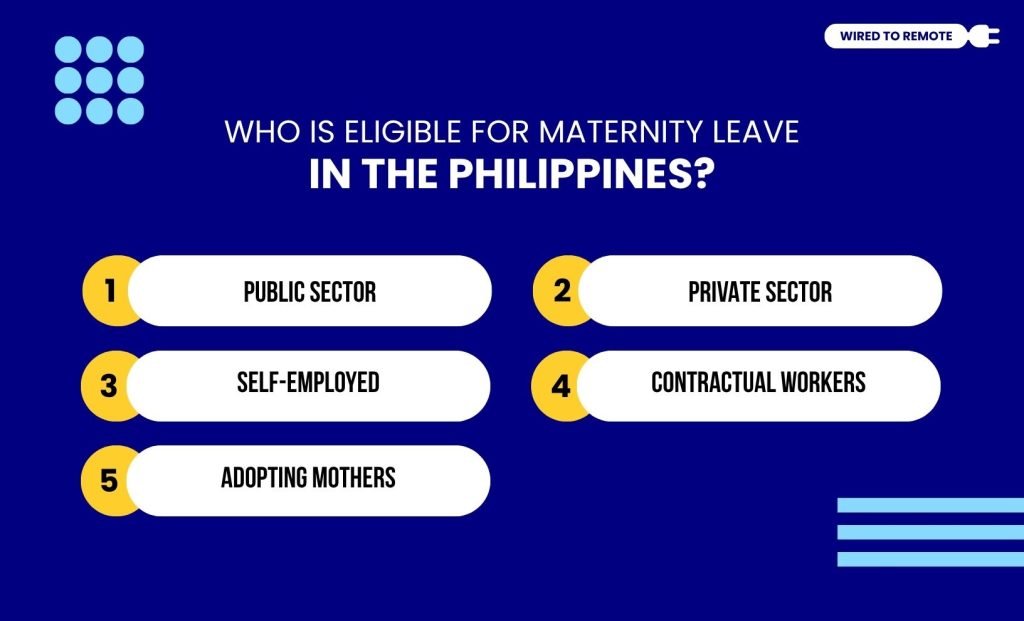
Whether you are eligible for the maternity leave Philippines, it completely depends on your employment type. Here is an eligibility breakdown that you can refer to:
1. Public Sector
Firstly, if you are working in the public sector or for the Government, the law entitles you to maternity leave under the Government Service Insurance System (GSIS).
Under this, you get completely paid leave for the total extent of your maternity phase. So, you get both financial support and time off.
2. Private Sector
In the private sector, there are a few conditions for your maternity leave. For instance, you should have been working with the company for more than 3 months to apply for the leave.
Also, you need to be a member of the Social Security System (SSS) to avail the benefits of your maternity leave.
3. Self-Employed
However, if you are self-employed or a freelancer, you need to be registered with the SSS. This will help you to get the benefits of the maternity leave.
4. Contractual Workers
For contractual workers, getting maternity leave can be tricky. As you are working with a company on a project or contract, you need to show your contributions to the SSS.
Moreover, you have to check the list of SSS considered projects to find whether your contract or project falls under it. As it doesn’t cover all the projects under the law.
5. Adopting Mothers
Lastly, in the Philippines, there is no mention of maternity leave for adoptive mothers. So, you might have to avail leave under the Parental and Domestic laws.
What Are The Limitations?
Although the Expanded Maternity Leave Law provides both financial and job security, there are some limitations. These limitations include:
- You cannot claim both the maternity benefits and sickness benefits available under the SSS Act during the same time period.
- Moreover, if you have an overlapping pregnancy and claim maternity benefits twice, the overlapped period will be deducted from the second claim.
- Finally, you can get only one maternity benefit irrespective of the number of newborns you have. For instance, if you have twins or triplets, you will still get the benefit for one child.
Benefits Of Maternity Leave: How Much Can You Get?
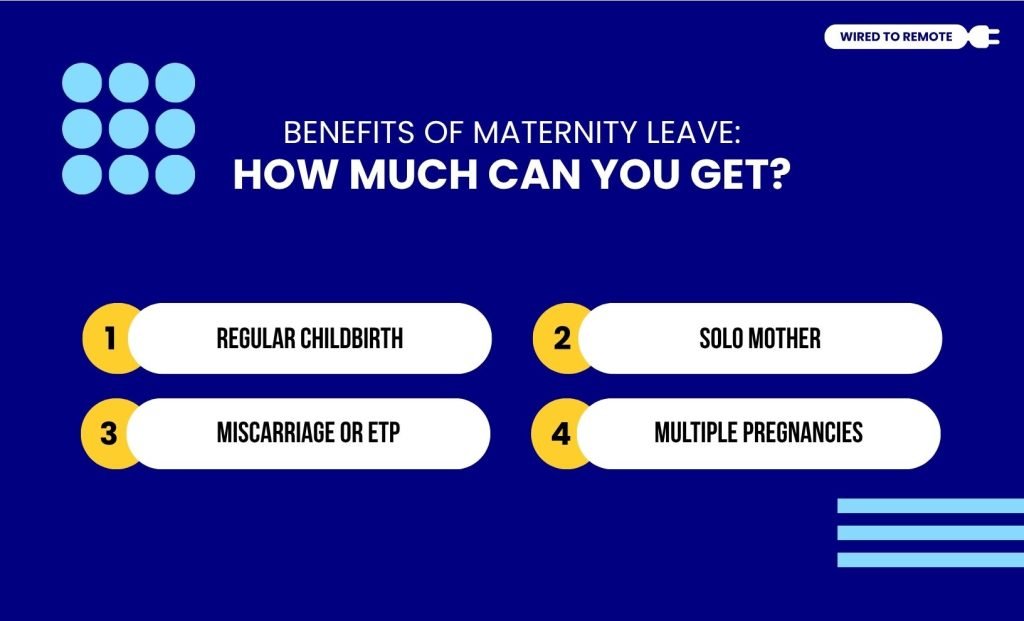
In the Philippines, the Expanded Maternity Leave Law provides separate benefits for different kinds of pregnancy situations. For instance,
- Regular Childbirth: A new mom who had a normal or caesarian baby is granted 105 days of paid leave in both public and private organizations. Additionally, she can extend the period for 30 days without payment.
- Solo Mother: According to the Solo Parents’ Welfare Act of 2000, a single new mom is granted an extra 15 days of paid leave to settle down. So, she gets a total of 120 days of maternity leave from the company.
- Miscarriage Or ETP: In the unfortunate case of miscarriage or ETP, the pregnant woman is granted 60 days of paid leave. During this time, she can recover from the shock and return to work with a fresh mind.
- Multiple Pregnancies: A working woman is allowed to apply for maternity leave benefits for multiple pregnancies. However, if the benefit periods overlap, the overlapped benefits will be deducted from the second claim.
Returning To Work After Maternity Leave In The Philippines
Even though returning to the workplace right after pregnancy can be challenging, the Philippines’ laws provide additional support.
And, knowing about them can help you to know your rights and stand up against wrong and unethical company practices.
Firstly, your employer cannot remove you or dismiss you from your position for taking maternity leave. So, you will be returning to your same position after the leave.
Secondly, you can take breaks to breastfeed your newborn. The law mentions this under the Expanded Breastfeeding Promotion Act.
Finally, your employer cannot deduct your maternity payment from your performance bonuses and 13th-month pay. So, you get both the benefits without compromising on one.
Now that you have a clear understanding of the maternity leave Philippines, you can exercise your rights and claim your benefits when required. So, if you are someone who is planning to have a new life on board in the Philippines, make sure to avail your maternity benefits to have a smooth recovery phase.
More Resources:

Leave A Comment