
I’ve thoroughly analyzed budgets, cross-checked rental listings, and reviewed grocery receipts to create what I believe is the most realistic estimate of the cost of living in Malta for remote workers and digital nomads.
If you are considering a move, this is what your money really gets you on the island.
Quick Answer: What Is The Cost Of Living In Malta?
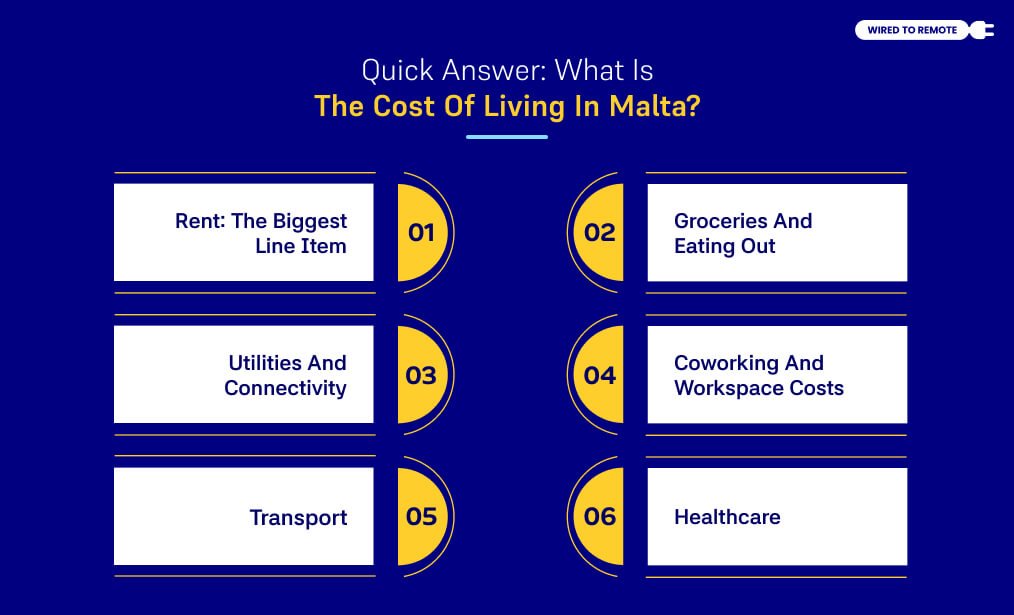
Generally, the average monthly cost of living in Malta for an individual is estimated to be between €1,300 and €2,200. This includes:
- Rent.
- Food.
- Utilities.
- Transportation.
- Moderate entertainment.
For a couple, the projected expenses would be in the ballpark of € 2,500 to € 3,500, whereas a family of four would probably need € 3,000 to € 4,500 or more, depending largely on location and lifestyle.
Mostly, Malta is ranked at quite a comfortable position amongst European countries with cost – it is a bit more pricey than Greece or Portugal, but still a lot cheaper than the UK or major American cities.
If you’re weighing whether the numbers work for you as a remote worker, I would say Malta sits comfortably in “affordable but not cheap” territory.
Rent: The Biggest Line Item
Housing will eat up the largest share of your budget by far, and it varies enormously depending on where you settle.
Nationally, the average rent for a one-bedroom apartment sits around €900 per month, but that figure hides a huge range:
| Location | Cost/ month | Perks |
|---|---|---|
| Gozo or southern Malta | €500-€800 | Quieter, more space, ferry commute required |
| Central Malta (Mosta, Birkirkara, Attard) | €700-€1,000 | More local, usually needs a car |
| Sliema, St. Julian’s, Valletta | €1,100-€1,600 | Highest rents, but walkable, social, and close to the best coworking space Malta has to offer |
I’ll be honest: the island is small enough that your neighborhood choice is really a lifestyle choice.
If I were prioritizing budget over buzz, I would lean toward Gozo or the central towns. If I wanted to be in the thick of the expat and remote work scene, I would accept the premium that comes with Sliema or St. Julian’s.
Groceries And Eating Out
With grocery prices, Malta is generally somewhere between Southern and Northern Europe. In reality, these prices are very much influenced by the fact that Malta is an island and depends on imported goods.
Cooking meals at home, a single person might set aside around 250 to 400 monthly, and a family of four would somehow feel it nearer €800 – €1,000.
Shopping at discount chains like Lidl and buying fresh produce from local vendors or mobile fruit trucks can meaningfully cut this down – sometimes by 15% – 20% compared to the bigger supermarkets.
Eating out is where Malta gets genuinely fun for remote workers.
Malta features many digital-nomad-friendly cafés. These spaces double as excellent workspaces. The island also offers a sheer variety of local dining spots.
Spend time exploring where to eat before settling into a routine. You will find budget-friendly local joints. These traditional spots serve pastizzi and rabbit stew.
Alternatively, you can visit pricier spots. These restaurants sit in the marina areas. They are perfect for when you want to treat yourself.
Utilities And Connectivity
Basic utilities – electricity, water, heating, cooling, and garbage – for an average apartment typically run between €80 and €150 per month.
The wide range comes down almost entirely to air conditioning use in summer, which can spike bills noticeably if you’re running AC through the hottest months.
Internet is generally reliable and affordable, with decent high-speed broadband available for around €30 – €40 a month.
That said, before you even land, it’s worth sorting out a Malta eSIM so you’re connected from day one rather than hunting for a local SIM card at the airport with a suitcase in tow.
Coworking And Workspace Costs
If you’re not working from home full-time, budget for a coworking space Malta membership. This typically ranges from €100 to €250 per month depending on the provider and whether you want a hot desk or a dedicated one.
Sliema, St. Julian’s, and Valletta have the highest concentration of these spaces, and many double as informal networking hubs for the island’s growing remote work community.
For lighter work days, I would also factor in the cost of working from a coffee shop Malta location now and then – a coffee plus a light meal usually runs you €8 to €15, and it’s a nice way to break up the week without committing to a coworking membership.
Transport
Here’s a genuinely nice surprise: Malta is the second country in Europe, after Luxembourg, to offer free public buses.
If you are a holder of a Tallinja card, you can travel on day and night bus routes as well as harbor ferries without paying any fare.
This, in itself, can greatly reduce your monthly expenses if you compare it to other cities in Europe.
Yet, many people still resort to using taxis or ride-hailing for comfort – mainly in parts of town where there are not many buses.
Your monthly budget should have another €40 – €80 if you intend to leave your neighborhood for sightseeing from time to time.
Healthcare
Public healthcare in Malta is strong. However, as a non-EU remote worker on a Nomad Residence Permit, you’ll need private health insurance rather than relying on the public system.
Private insurance typically costs between €50 and €200 per month depending on your age, coverage level, and provider.
I would treat this as a non-negotiable line item in your budget rather than something to skimp on.
How Cost Of Living In Malta Compares Internationally
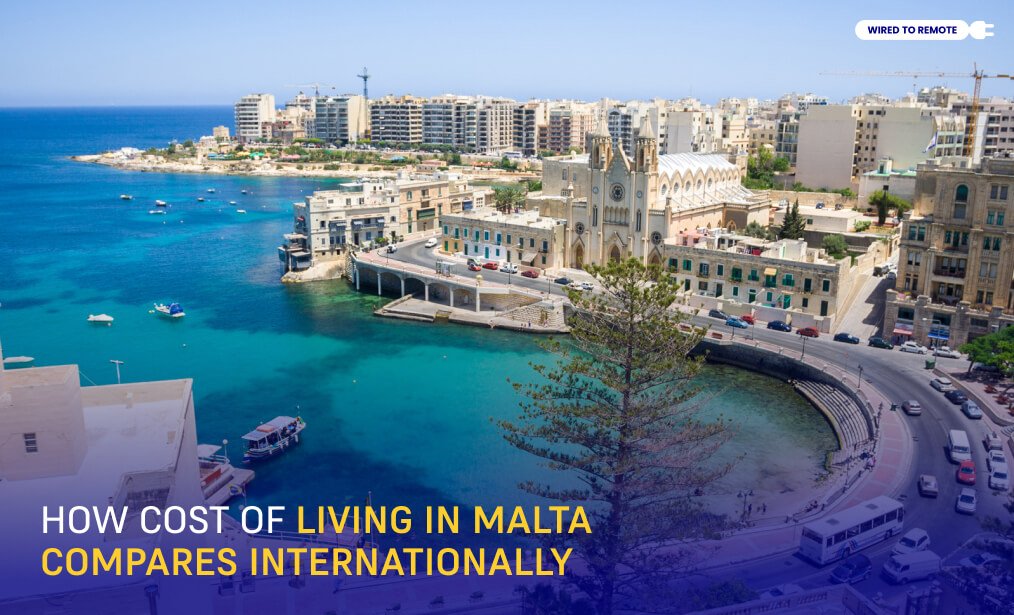
In general, Malta is approximately 20% – 30% cheaper than the USA, with lower expenses for accommodation, medical care, and utilities.
When it comes to the UK, it is practically 16% cheaper without considering rent. However, the high-priced beach rents can diminish that difference very fast.
So, if you live in a large city in Western Europe or North America, you could be pleasantly surprised at how much you can save.
Then again, if you are coming from Southeast Asia or Eastern Europe, the cost of living in Malta will be a lot higher for you.
A Sample Monthly Budget For A Single Remote Worker
Here’s roughly how I would allocate a mid-range monthly budget:
- Rent (1-bed, central area): €900
- Groceries: €300
- Utilities: €100
- Coworking space Malta membership: €150
- Coffee shop Malta visits and dining out: €200
- Transport: €50
- Health insurance: €120
- Miscellaneous/leisure: €200
Total: approximately €2,020/month
This sits comfortably within the €1,300 – €2,200 range I mentioned earlier, landing toward the higher end because it assumes central living and a coworking membership rather than working from home.
Is Malta Worth The Cost?
This is really a personal calculation, but I’ll share my honest take: Malta’s cost of living sits in the middle of the pack for Europe.
However, you’re paying for:
- English-language ease.
- EU access.
- Flat 10% tax rate for qualifying nomads.
- And a genuinely pleasant Mediterranean lifestyle.
If your income comfortably clears the €42,000/year threshold required for the Malta Digital Nomad Visa, the cost of living in Malta generally leaves a healthy amount left over for savings or travel.
Research safety in Malta before you commit. Ensure the island fits your specific circumstances. Also, look into the best places to live. Match these areas to your budget and lifestyle preferences.
The island is small. However, neighborhood prices differ significantly. Character differences between areas are also bigger than you would expect.
So, Is Malta Worth Living In As A Remote Worker?
I want to be upfront about this. The cost-of-living figures shift with the seasons, rental market trends, and your personal spending habits, so treat every number here as a planning guide rather than a guarantee.
Also, the rental growth in particular has been decelerating recently after a few years of sharp increases. Which is good news if you’re budgeting for 2026 and beyond.
My honest recommendation: build in a buffer of at least 10% – 15% above whatever number you land on, since imported goods, summer electricity spikes, and short-term lease premiums have a way of pushing costs higher than the headline averages suggest.



Leave A Comment