
Quick Answer
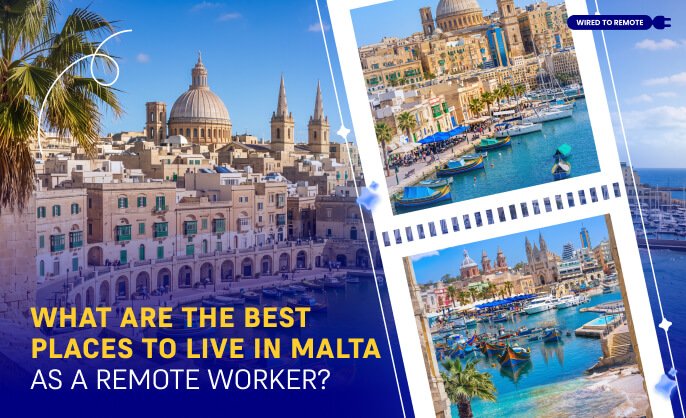
The best places to live in Malta as a remote worker include Sliema, St Julian’s, Gżira, and Valletta. These towns offer great convenience due to their lively urban setting.
For a slower pace, you can choose Mellieħa or Marsaxlokk. These areas offer a much more residential lifestyle. Decisions are based on several key factors.
These include coworking access levels and overall internet reliability. Rent levels and daily walkability are also highly important. Sliema and St Julian’s are the main hubs. This is where most digital nomads have settled.
Why Where You Live In Malta Actually Matters
When I first started researching this, I assumed Malta was small enough that the neighborhood wouldn’t matter much. It does.
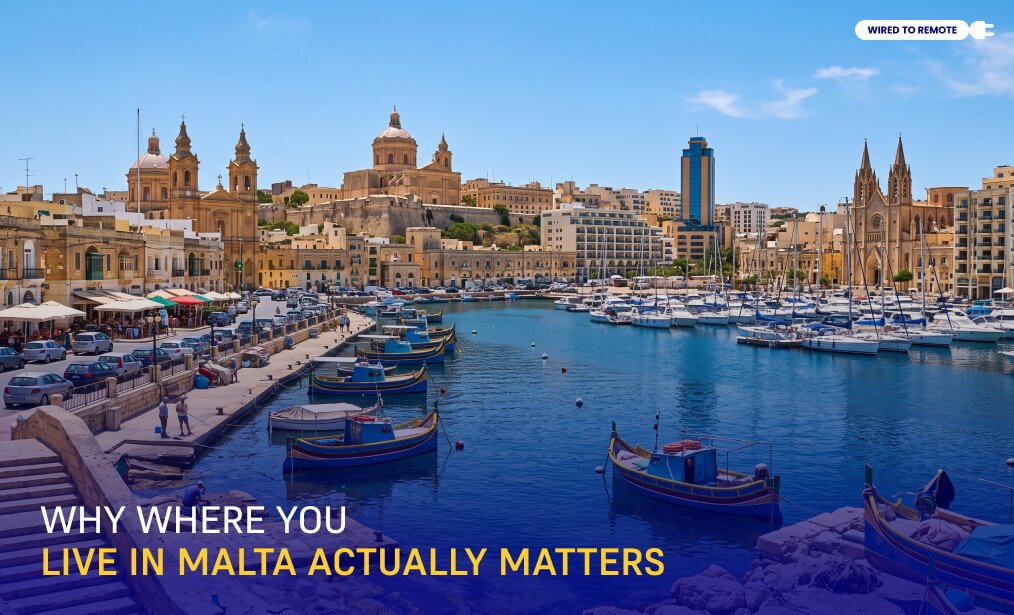
The main island is only around 27 km long. Yet your daily life will differ wildly based on location. Your experience depends heavily on good infrastructure.
You might live in a charming seaside town. This gives you three coworking spaces around the corner. Alternatively, you might live far from the nearest café. This setup requires a scooter to get there.
You may already hold a Malta digital nomad visa. Perhaps you have lived on the island all year. You might just be planning to apply for one.
Either way, this is an important lifestyle decision. It is worth more than five minutes of scrolling. Do not just casually browse your favorite listing app.
I’ve pulled together what I found to be the most useful breakdown of where remote workers actually settle, and why.
What I Looked At Before Ranking These Neighborhoods
Before getting into the list, it’s worth explaining my criteria, because “best” means different things to different people.
I weighed four factors:
- Proximity to a genuine coworking space Malta option.
- Walkability.
- Rent relative to the cost of living in Malta overall.
- How safe the area feels day-to-day.
So, without further ado, let’s get started!
Best Places To Live In Malta
Here’s my actual ranking, based on infrastructure, cost, and lifestyle fit.
1. Sliema – Best Overall For Convenience
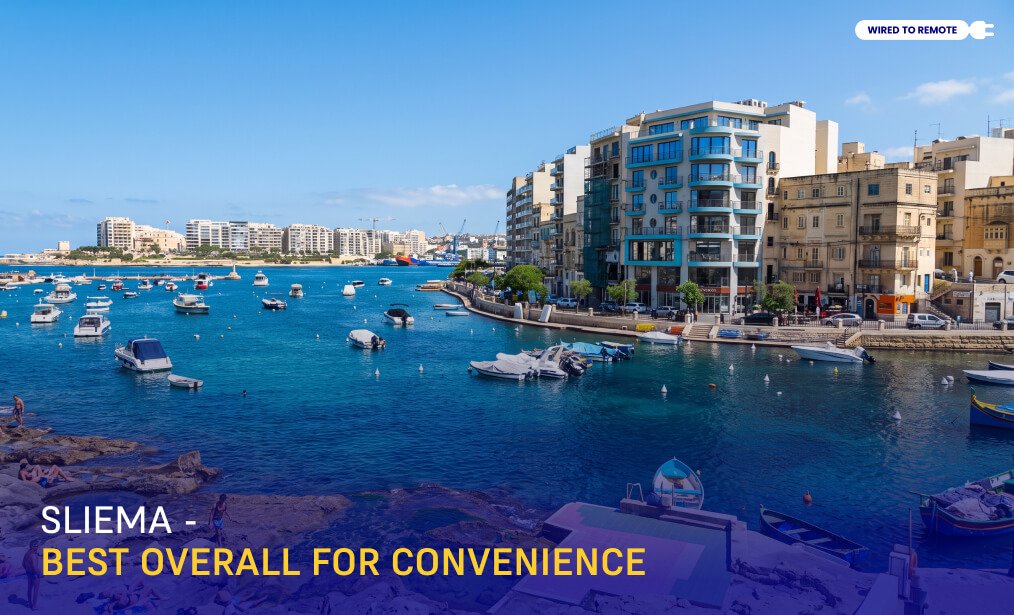
Sliema is where the largest concentration of the digital nomad community has landed, and it’s easy to see why.
The promenade is walkable end to end, there’s a dense cluster of cafés, and rent for a one-bedroom typically runs €800 – €1,200 a month.
If you want a coffee shop Malta location within a five-minute walk of your apartment no matter where you’re staying, Sliema delivers that more reliably than almost anywhere else on the island.
2. St Julian’s – Best For Nightlife And Social Life
St Julian’s is located very close to Sliema geographically. However, the atmosphere of St Julian’s is completely different.
In fact, St Julian’s features a much younger overall vibe. It offers more opportunities for various nightlife activities. This is due to the close proximity of Paceville.
St Julian’s is a top spot for your home base. It suits people who like combining fixed office hours with an active social scene.
The coworking spaces in St Julian’s are unique. They usually operate as small hubs for freelancers. Most of the bigger franchise coworking chains are located elsewhere.
3. Gżira – Best Value Near Sliema
Gżira sits just inland from Sliema and offers a genuinely more affordable alternative without sacrificing much in terms of access.
Rent here typically runs €700 – €1,000, and the neighborhood has quietly built up its own café and coworking scene over the past couple of years.
I would point budget-conscious nomads here before anywhere else on this list.
4. Valletta – Best For Culture And History
Malta’s capital is compact, walkable, and full of restored buildings now doing double duty as coworking spaces.
It lacks the same nightlife St Julian’s has, but it makes up for that with museums, architecture, and a genuinely calm evening atmosphere.
Valletta is also one of the better answers if you’re wondering where to eat in Malta without leaving your neighborhood – the density of restaurants and wine bars within the old city walls is hard to beat.
5. Mellieħa And St Paul’s Bay – Best For A Slower Pace
Sliema and St Julian’s offer a busy city life. In contrast, the northern part will surprise you completely. It features a totally different rhythm of life.
Mellieħa is built directly on a scenic hilltop. The town offers beautiful, uninterrupted sea views. It represents the true spirit of the Maltese people. You will find only small traces of expats here.
This location is peaceful and less expensive. It is a good fit for specific digital nomads. It suits those aiming to finish work and enjoy quiet time.
6. Marsaxlokk – Best For Isolation And Authenticity
Marsaxlokk is a working fishing village in the south with essentially no dedicated nomad infrastructure, which is exactly its appeal for some people.
You’ll need a rental car or scooter and probably a membership at a Sliema coworking space to make this work long-term, but for anyone craving a genuinely local, non-touristy home base, it’s worth the tradeoff.
7. Mdina And Rabat – Best For Quiet Focus
Known as the “Silent City,” Mdina bans regular car traffic within its walls, which makes it one of the most peaceful places on the island to actually get deep work done.
It’s less practical for day-to-day errands, but paired with a short commute to Rabat next door, it works well for anyone prioritizing quiet over convenience.
8. Gozo – Best For A Complete Change Of Pace
Malta’s sister island is a short ferry ride away and offers the same safety and healthcare infrastructure with a noticeably slower, more rural lifestyle.
It’s not the best places to live in Malta list for anyone who needs daily access to a large coworking community, but for nomads working async or on a flexible schedule, Gozo is genuinely underrated.
How Cost Factors Into The Decision
Rent is the single biggest variable across this list, and it’s worth putting your neighborhood decision in the context of the broader cost of living in Malta.
Coastal, central areas like Sliema and St Julian’s sit at the top of the rent range, while Gżira, Marsaskala, and the northern villages offer meaningfully lower rent for a short bus ride’s worth of added distance.
I would budget the extra convenience against what you’d actually save by living ten minutes further out – for most remote workers, it’s a worthwhile trade.
Staying Connected Wherever You Land
Wherever you end up on this list, connectivity shouldn’t be the thing that determines your neighborhood choice – Malta’s infrastructure is solid island-wide.
That said, I would still recommend picking up a Malta eSIM before you arrive rather than relying purely on apartment Wi-Fi in your first week, especially if you’re viewing multiple neighborhoods before committing to a lease.
How Malta’s Neighborhoods Compare To Other Nomad Hubs
If you’re still weighing Malta against other options on your shortlist of the places that are popular among remote workers, it helps to compare neighborhood-level tradeoffs rather than just country-level ones.
Coworking spaces in Lisbon are excellent and arguably more numerous than Malta’s, but Lisbon’s popularity has pushed rents in nomad-friendly districts noticeably higher than Sliema or Gżira.
If budget is the deciding factor, the cost of living in Bali as a remote worker remains lower than almost anywhere in Malta, though living in this tropical location long-term comes with a very different visa and healthcare landscape to plan around.
Closer to home in Europe, Latvia compares favorably on paper when it comes to safety. However, the climate and shorter coworking-café culture make it a harder sell than Malta’s Mediterranean neighborhoods for anyone prioritizing year-round outdoor life.
Portugal remains Malta’s closest real competitor – the cafes for remote workers in Porto scene is genuinely excellent, and food here rivals anything you’ll find in Valletta, though Malta’s English-speaking environment still gives it an edge for nomads who don’t want to learn a new language.
And if Latin America is on your radar instead, the cost of living in Tulum undercuts Malta significantly, while that in France – particularly in nomad-popular cities – tends to run well above anything on this Malta list.
My Recommendation: Best Places To Live In Malta
I recommend Sliema or Gżira for first-time digital nomads. This is the best choice for newly arrived professionals.
St Julian’s is a better option for a vibrant social scene. Choose this area if you prefer nightlife over quiet settings.
Mellieħa or Gozo will suit you if you want a change of pace. These areas are ideal if you previously lived in busy hubs. They are perfect for getting away to a peaceful place.
There is no absolute solution for living in Malta. The best choice depends entirely on your ideal everyday routine.



Leave A Comment