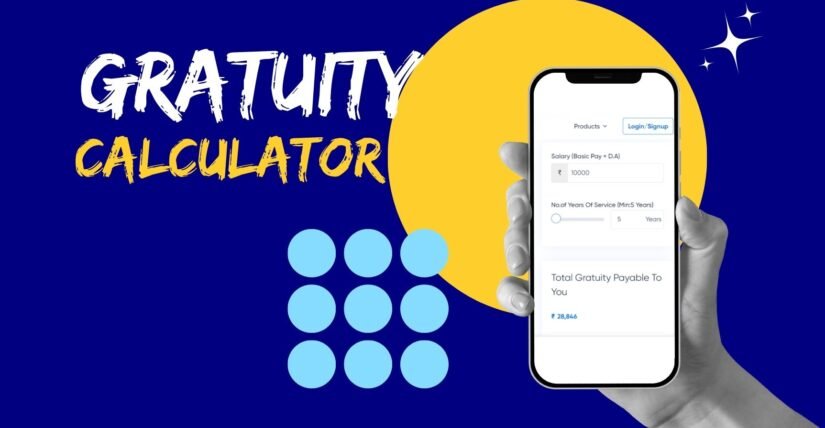

Gratuity Calculator
Total Gratuity Payable To You
One of the core benefits of working long-term with a firm is getting a big amount of gratuity.
Whether you are an on-site or remote professional, you can get a lump-sum gratuity as a token of appreciation from your employer.
So, if you meet the specific eligibility criteria under the Payment of Gratuity Act (1972), you can get the gratuity amount.
But different companies provide different amounts for gratuity.
So, a gratuity calculator can help in calculating the payments with ease. Just put in the numbers, and it will give accurate results. Saving time and resources.
But before that, having a clear knowledge of how to calculate it, its eligibility criteria, legal framework, and other aspects is essential.
So, keep reading this blog to know more!
What Is Gratuity?
Gratuity refers to the financial benefit that employees receive from their employers after completing the minimum period of time in the company.
Generally, the employer gives it as a gesture of appreciation for the employee’s loyalty and dedicated service to the company.
So, when the employee’s contract terminates, they get a lump-sum amount.
Moreover, the Payment of Gratuity Act of 1972 in India mandated the payment of gratuity for both public and private employees in various sectors.
So, by paying the gratuity amount, employers can comply with the labor laws of India. Avoiding penalties for exploiting the loyal employees.
How To Calculate Gratuity?
Calculating the gratuity of an employee is quite easy. Most companies use a simple mathematical method to determine the gratuity amount for employees.
So, based on the last drawn salary of the employee and the total years served, the gratuity is calculated. That is, the formula is—
Gratuity = (Last drawn salary + Dearness Allowance) × 15 × number of completed years of service ÷ 26
where 26 refers to the monthly working days without Sundays, and 15 refers to the number of days the employee received the salary in a year.
Who Are Eligible For Gratuity Payments?
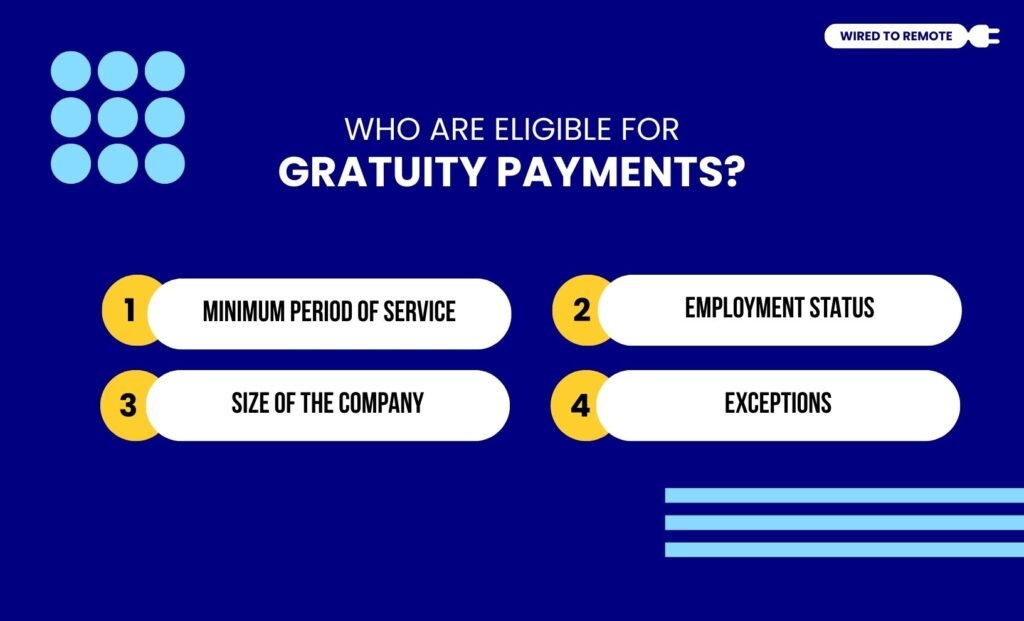
Since gratuity is a token of appreciation, there are a few criteria that the employee needs to meet to become eligible for the large payment.
1. Minimum Period Of Service
Firstly, the minimum period of service expected from the employee is 5 consecutive years in the same company. So, only after working for the minimum period, the employee can get gratuity.
2. Employment Status
Moreover, only the contractual and permanent employees of the firms get gratuity. So, a temporary employee might not be eligible for gratuity even if they work for the minimum period.
3. Size Of The Company
In addition to this, the size of the company matters. So, the employer must have at least 10 employees to be eligible to pay them gratuity.
4. Exceptions
However, there are a few exceptions to the above-mentioned criteria. For instance, in case of death or disability, the legal heirs get the gratuity amount.
Moreover, this amount does not depend on the minimum years they served.
Also, workers who leave the company after 5 years, without completing the 10-year tenure, get a proportion of the gratuity. So, they don’t receive the full gratuity amount.
What Is A Gratuity Calculator?
The gratuity calculator refers to a digital tool that evaluates the estimated gratuity amount for an employee based on their total years of service and last drawn salary.
So, it simplifies the complicated calculations and helps users get fast and accurate results. That is, making it easier for both employees and employers to understand the payouts.
Moreover, for remote companies managing Indian teams, a gratuity calculator designed on the Indian legal framework makes the process easier and faster.
So, the global employers can calculate the exact amount while complying with the labor laws of India.
How Does A Gratuity Calculator Work?
A gratuity calculator is designed with the mathematical formula prescribed by the Payment of Gratuity Act.
So, it takes inputs from the user— last drawn salary and total years of service— to calculate the estimated amount.
Here is a step-by-step guide on how to use the Wired To Remote: Gratuity Calculator—
- In the calculator, input the last drawn salary — inclusive of basic salary and the amount of DA.
- Then, input the total number of years the worker has provided service.
- Finally, click on the “Calculate” button, and the estimated amount will be automatically calculated.
Common Gratuity Calculations For Different Scenarios

Now, to better understand how the calculator does the gratuity calculations, here are two hypothetical scenarios.
That is, one in which the employee is covered under the Act, and another where they are not. So, the gratuity comes as follows—
1. Employee Covered Under The Act
For the employees working for a firm covered under the Act, the gratuity is calculated using the standard formula.
So, if the employee’s last drawn salary is ₹20,000 and they have completed 8 years of service, then the gratuity becomes—
Gratuity = (15 × 20,000 × 8) / 26 = ₹92,308
So, upon termination of employment, they will receive ₹92,308 as gratuity from the company.
2. Employee Not Covered Under The Act
Contrarily, for the employees working for an industry not covered under the Act, the gratuity is calculated for all the days of the month.
That is, in place of 26, the total number of working days becomes 30. So, the gratuity amount is calculated using the formula—
Gratuity = (15 × last drawn salary × years of service) / 30
Now, if an employee’s last drawn basic salary is ₹20,000 and the total number of years of service is 6 years, then the gratuity becomes—
Gratuity = (15 × 20,000 × 6) / 30 = ₹60,000
So, when the employee leaves the company, they receive ₹60,000 gratuity from their employer.
What Legal Framework Do Remote Indian Firms Follow For Gratuity?
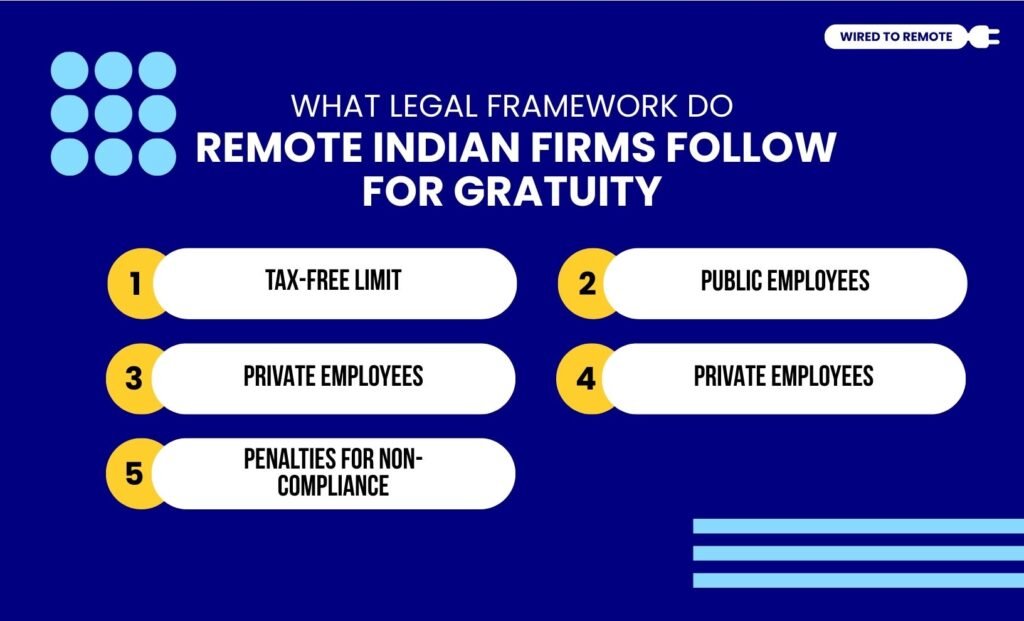
The foundation of the legal framework of gratuity for Indian employees depends on the Payment of Gratuity Act. So, the key aspects of the Indian legal framework are—
- Tax-Free Limit: Firstly, the law imposes tax on gratuity based on the employment type and whether the employee is eligible for it or not.
- Public Employees: Moreover, public employees get gratuity from either the State or the Central Government of India. So, it is completely exempt from tax imposition.
- Private Employees (Under The Law): If the private employee receives a gratuity amount less than ₹20 lakhs, then they are exempt from paying the income tax on gratuity.
But if the employee’s gratuity exceeds the ₹20 lakhs threshold, then they have to pay the taxable amount on the excess part. So, the excess part is added to their salary and taxed accordingly.
- Private Employees (Not Under The Law): But if the private employee is not covered under the law, they get tax exemptions for gratuity of less than ₹20 lakhs.
Moreover, the half-month’s average salary for all the years of service is calculated. So, the part of the gratuity is exempted from the tax implications.
- Penalties For Non-Compliance: Finally, if employers fail to comply with the legal framework proposed by the Act, then they face penalties.
For minor compliance issues, they have to pay fines. Whereas major compliance issues result in at least six months of imprisonment.
Things To Keep In Mind While Calculating Gratuity
Calculating gratuity using the Gratuity Calculator of Wired To Remote is quite easy. But a few considerations should be made while calculating the accurate amount—
- Clearly stating the gratuity policy of the firm to the employees to avoid disputes.
- Avoiding the reduction of the amount prescribed by the Act through contracts.
- Allowing employees to nominate their beneficiaries to collect gratuity on their behalf in case of their death or disability.
Remember, the gratuity amount is the appreciation of the employer for your company loyalty and dedicated work. So, you have the right to get the proper payment for it.
And, with the calculator right at the top of this page, what are you waiting for? Go ahead and check your estimated gratuity amount right now!
FAQs
Here are some of the frequently asked questions that you can check.
The Payment of Gratuity Act prescribes a tax exemption on the gratuity amount under ₹20 lakhs for private employees. Moreover, for public employees working for the government, there is no limit on tax exemption. So, they do not have to pay any income tax on gratuity.
Generally, the gratuity amount limit for Indian employees was ₹20 lakhs for both public and private employees. But with the increase in the DA, the limit for public employees has become ₹25 lakhs from January 2024.
Any employee completing a minimum of 5 years of service can receive gratuity from the employer. So, even if they are not retiring from the company, but they have completed 5 years, they should get paid the gratuity.
Given that the Gratuity Act (1972) prohibits employers from refusing payment of gratuity to employees, they can still refuse under certain specific conditions. For instance, if the employer removes the employee from service due to misconduct that has led to severe financial loss to the company, then they can refuse the gratuity and keep the reason documented for legal justification.



Leave A Comment