

With the exponential curve of remote work, isolation, neglecting health, and an unproductive workforce is becoming a growing concern.
And, the culprit for this is thelack of mental and physical well-being of remote employees.
So, simply prioritising their health with virtual activities and educational webinars can dynamically turn the productivity of the workforce.
That’s why the workplace wellness program is being readily adopted in most remote firms.
With its curated survey data and personalized activities, it improves the overall health of remote employees. Reducing stress and boosting the employee retention rate.
But how to address employee well-being for an effective workforce? Well, your remote buddy’s here with the perfect guide for a healthier and productive work environment.
In this blog, I will focus on the diverse aspects of wellness programs for workplaces by shedding light on—
- Its basics and benefits,
- Types of wellness programs,
- Steps to implement one in the team, some tips, and more.
So, come dive right in!
What Is A Workplace Wellness Program?
First things first, a workplace wellness program is designed to address the overall employee well-being.
That is, it identifies the core workforce health issues — physical, mental, or emotional — and addresses them with effective programs.
So, it provides a set of fitness activities, mental health support, employee well-being resources, stress management courses, and nutritional charts.
Moreover, these wellness programs are designed with flexible access options. So, all remote employees can access these resources in their own free time.
Key Benefits Of A Workplace Wellness Program
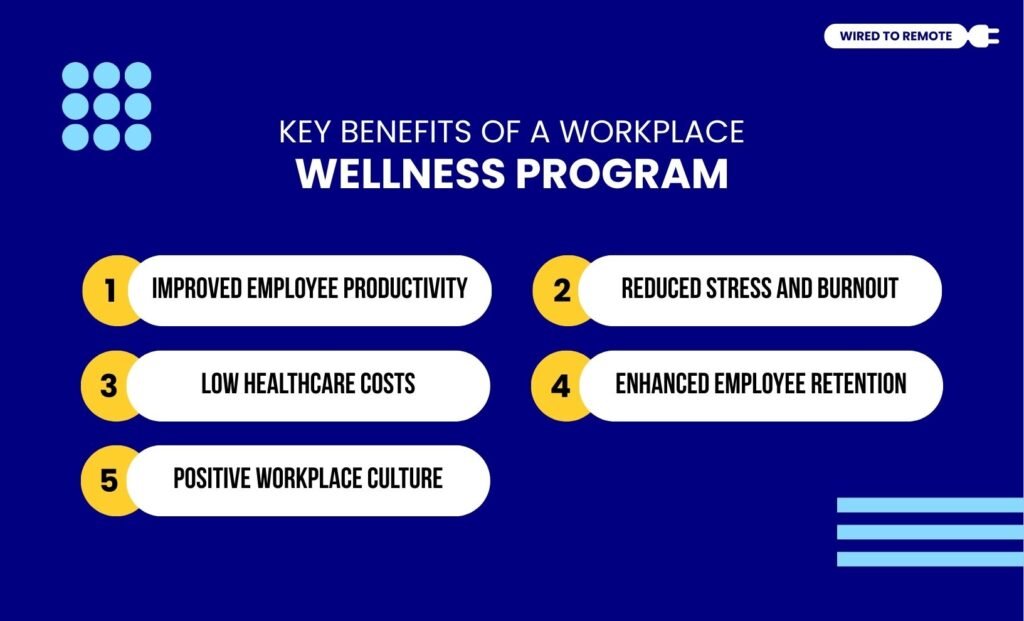
Given that workplace wellness programs offer massive benefits, they are readily adopted by both remote and on-site organizations. So, some of these benefits include—
1. Improved Employee Productivity
Firstly, the activities and resources provided in the wellness programs aim at improving the physical, mental, and emotional health of remote employees.
Now, with a healthy body and mind, they become more focused, energetic, and efficient in handling the work. So, the employee productivity improves with better health conditions.
2. Reduced Stress And Burnout
Apart from a productivity boost, these wellness programs address the core factors that directly impact stress and feelings of isolation.
That is, they come with effective initiatives like meditation, yoga, mental health support, and mindfulness to help employees reduce stress and burnout. Ensuring a higher retention rate.
3. Low Healthcare Costs
In addition to this, the programs make sure the employees are healthy, which in turn lowers the absenteeism and healthcare costs.
That is, healthy employees do not take frequent sick leaves or need compensation for hospitalization. So, it boosts productivity while reducing the costs for the employers.
4. Enhanced Employee Retention
Moreover, the wellness programs make the employees feel valued and supported in a nurturing work environment. This gives them job satisfaction and improves the retention rate.
5. Positive Workplace Culture
Finally, the inclusivity of the wellness programs promotes collaboration across cross-functional teams, provides them with a sense of belonging, and improves teamwork.
So, these initiatives ensure the workplace culture is positive and nurturing for the employees. Boosting the employees’ strong morale and loyalty towards the company.
Types Of Wellness Programs For Workplaces
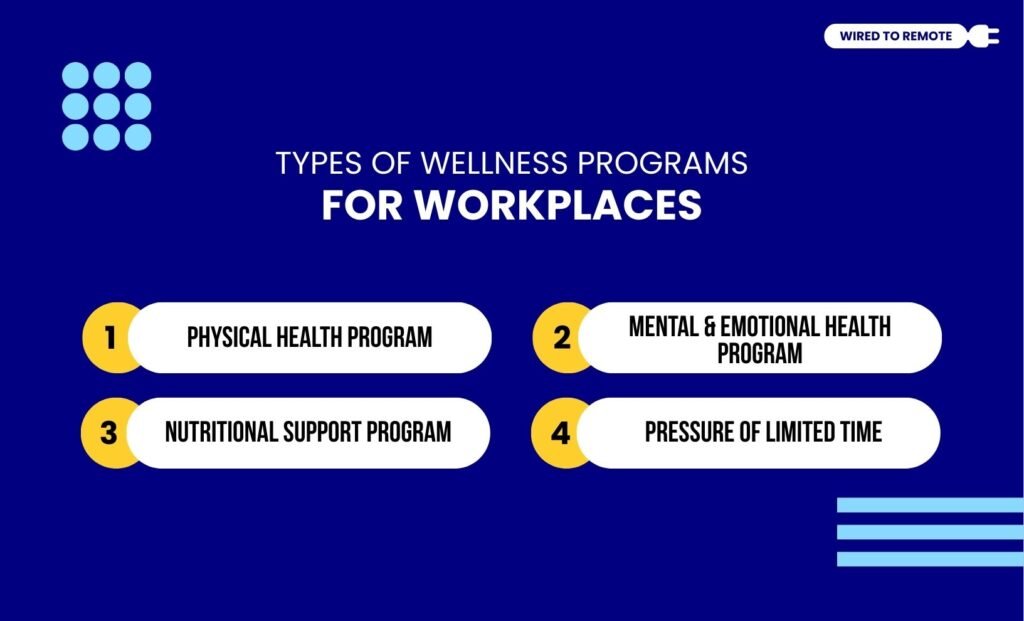
Since a diverse workforce comes with diverse needs, a one-size-fits-all program cannot provide maximum benefits. So, here are some of the types of wellness programs—
- Physical Health Program: Includes virtual fitness challenges, health screenings, gym memberships, and ergonomic home work setup.
- Mental and Emotional Health Program: Focuses on meditation, yoga, mindfulness activities, and employee counseling.
- Nutritional Support Program: Provides nutritional charts, balanced meal instructions, webinars, and workshops on balanced diets.
- Social and Team-Bonding Program: Consists of group activities, team challenges, social events, and virtual gathering sessions.
How To Implement The Workplace Wellness Program?
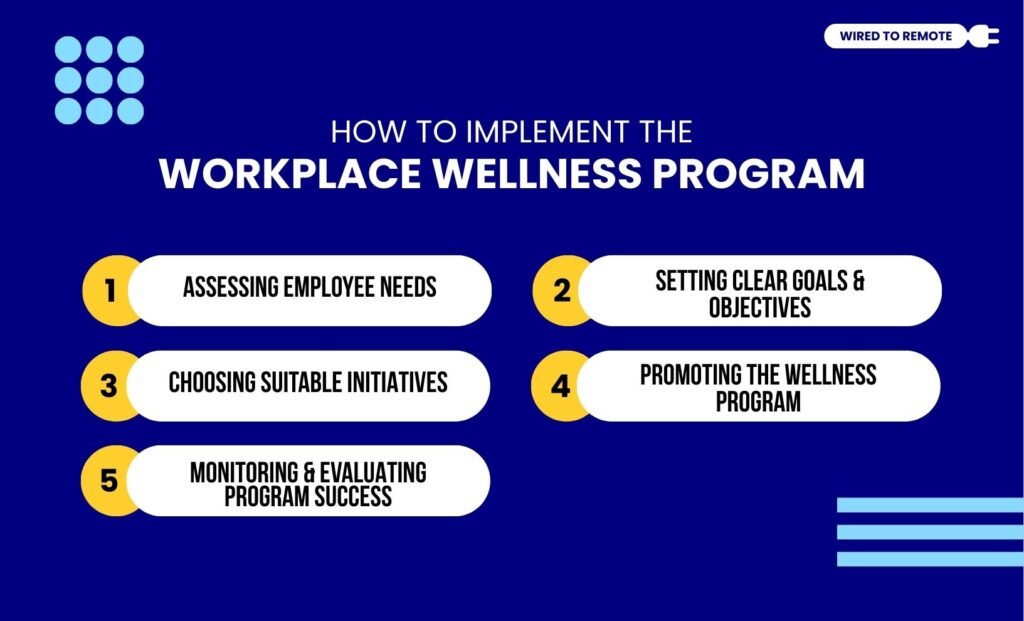
Now, if you want to implement the workplace wellness program in a remote setup, here are the steps. So, just follow these steps to improve the workforce health and productivity.
1. Assessing Employee Needs
Firstly, you need to assess the exact needs of the remote employees.
So, conducting surveys and feedback systems can help identify the physical, mental, and emotional needs of the remote workers.
2. Setting Clear Goals And Objectives
Then, you need to set clear goals to ensure the wellness program helps achieve them.
That is, the key objectives can be either improving productivity, reducing employee absenteeism, or enhancing employee satisfaction.
So, based on the goals, the specific type of wellness program can be developed with effective initiatives and activities.
3. Choosing Suitable Initiatives
After that, you need to choose the right initiatives and activities that address the exact needs of the remote employees.
So, if the employees are failing in physical health, then choose fitness challenges and gym membership options.
But if the employees are facing issues with mental or emotional health, choose yoga classes, mindfulness, and mental support programs.
4. Promoting The Wellness Program
Then, promote the incorporation of the wellness program through internal communication systems, team meetings, and even newsletters.
So, all the employees are aware of the incorporation of the workplace wellness program. Allowing them to take advantage and improve their overall well-being.
5. Monitoring & Evaluating Program Success
Finally, monitor the employee performance and productivity to evaluate the effectiveness of the program.
Moreover, collect the surveys and feedback from employees on the program. So, you can get a clear picture of the wellness program.
Then, based on the reports, you can adjust the activities and initiatives to improve the effectiveness. Turning the productivity of the remote teams.
Tips To Incorporate A Successful Workplace Wellness Program
Simply knowing about the wellness programs for workplaces is not enough. So, here are some tips to ensure the implemented program is successful—
- Tailoring the activities and initiatives of the program based on the needs of the employees.
- Encouraging the employees to actively participate in the program.
- Regularly updating the activities and giving rewards for completing them.
- Ensuring it is flexible and accessible to all employees.
So, by keeping these few things in mind, you can build a motivated and healthy workforce that increases productivity.
And, with this guide, creating the perfect wellness program is like a piece of cake.
So, take this chance to improve employee well-being while simultaneously improving workplace productivity.
FAQs
Here, I have delved into the common questions around the workplace wellness program for remote teams.
Generally, wellness programs in workplaces are designed to address the physical, mental, and emotional well-being of the employees.
That is, they provide screenings, fitness challenges, and mental health support to employees for fostering healthier habits. So, they can live a better lifestyle.
Yes, absolutely. Similar to regular office teams, remote teams can implement a workplace wellness program to ensure the overall well-being of the employees.
But these programs are slightly different. That is, they consist of digital activities like webinars, virtual health challenges, and online mental health support.
This way, the programs can address the major employee well-being issues flexibly through digital tools and virtual activities.
The best way to ensure the effectiveness of the wellness program is by understanding the exact employee needs and addressing them with effective programs.
Some of the ways to ensure this effectiveness include—
• Surveying and understanding the needs of the remote employees.
• Engaging employees from cross-departments with incentives and rewards on completion of the wellness programs.
• Ensuring the program is inclusive and fits various roles, fitness levels, and flexible work hours.
• Easy access and clear communication about the activities, participation, and reward system for the program.
• Setting and tracking measurable metrics to ensure the program’s effectiveness is documented with the right data.



Leave A Comment